Asia 1st Internet Advertising & Digital Media Marketing Company
Digital MarketingDigital MarketingDigital Marketing
0337-7555540
sales@yis.solutions
D.H.A. Phase 7, Karachi, Pakistan

E-mail Marketing

One-to-One Email Marketing vs Bulk Campaigns 

We recently read an article in e-consultancy with Jim Rudall, Head of EMEA at Intuit Mailchimp, discussing his perspective on email marketing. At digitalmediabooster, a leading provider of One-to-one Email Marketing at Scale solutions, we also have our own bulk Email Marketing tool, so we know a thing or two and have some thoughts about where each approach can flourish. Every Email Opened Jim Rudall points out a fundamental consumer behavior: “I will only open emails from brands I’ve subscribed to and willingly shared my details with.” We resonate with this sentiment at digitalmediabooster. In the flood of daily emails, it’s common to skim through, looking only for familiar senders or pertinent messages. Bulk Email Marketing excels in broad reach, making it an invaluable tool for announcements and broader communications meant to be seen by a wide audience. Meanwhile, One-to-one Email Marketing at Scale excels in creating personal engagements. As we know, the world of marketing is changing. Having a direct personal connection with someone before you decide to use bulk email tools will likely be the future; giving clear opt-ins/outs using One-to-one Signatures is a clever way to ensure people are receptive to your offer before sending automated emails. Combining methods ensures that your marketing communications engage your audience personally, optimizing for relevance and reach. This effective strategy will boost confidence in your marketing strategies. Once you’ve connected using One-to-one Email Marketing, keeping your contacts updated using bulk email tools is genuinely beneficial. With the right bulk email tool, you can use a plethora of content to stay top of mind. Subject Line Significance Subject lines are a pivotal element in both forms of email marketing. With digitalmediabooster’s One-to-one approach, each subject line is meticulously tailored to the recipient, enhancing the likelihood of the email being opened and acted upon. The subject line of a personal email is most likely unique to an ongoing conversation, making it immediately relevant. In Bulk Email Marketing, compelling subject lines are equally important as they help your email stand out among many. By applying best practices from One-to-one Emails to Bulk Email strategies, we help ensure your messages captivate and engage on any scale. This adaptability of our services will secure your marketing efforts. Email Bugbears Rudall also highlighted common pitfalls in email marketing, such as irrelevance and clickbait tactics. These issues often stem from overly centralized email content strategies. At digitalmediabooster, we decentralize the content creation to the individual sender who best understands the recipient’s needs and context, ensuring every email is as relevant and engaging as possible, whether sent to one person or a thousand. Our unique ‘banner segmentation‘ feature allows you to tailor your email banners to specific segments of your audience, ensuring all emails are perfectly relevant. Real personalization Real personalization is more crucial than ever in an era of moving away from third-party cookies and under strict data privacy laws like GDPR. One-to-one Email Marketing at Scale offers unmatched personalization by naturally incorporating relevant business interactions into emails. For Bulk Email Marketing, this principle can be adapted by segmenting audiences more finely and tailoring messages to meet the nuanced needs of each group, making even mass communications feel more personal and targeted. If your software can do this, that’s great, but we sometimes find functionality lacking. One-to-one Email Marketing focuses on adding branding and engagement to individual company mail, which is personalized by its very nature. We’ve checked, and it literally can’t get more personalized than me sending you an email about something specific. We’re not suggesting you replace your whole marketing tool kit, but if you care about personalization, there’s no better alternative. Except for a call or a face-to-face meeting, neither of which can be achieved at scale. Is AI the future? For many consumer brands, AI may be the answer to personalization regarding email and big data. For B2B, it’s a little different. People expect more from a business relationship, and most businesses will be using AI in one form or another, so it’ll become more accessible and easier to spot and more and more taboo when used in communication. We may see the humble one-to-one email come into its own again as a bulwark against everyone else conversing with robots. We’re not saying AI won’t have a place in the marketing mix, but human interaction will become rare, and rare holds value. You just need to ensure you’re taking every advantage of such valuable interaction to maximize engagement from personalized one-to-one emails. It’s also been noted by IBM that many large corporations are looking to build proprietary AI models to address the issue of using their intellectual capital. This may lead to the decline of bulk email and allow closer interaction between humans and machines using more personal tools, such as One-to-one Email Marketing at Scale. Prepare for marketing shifts The synergy between Bulk Email Marketing and One-to-one Email Marketing at Scale is clear. While bulk emails are great for wide-reaching messages and gaining initial attention, one-to-one emails build on this foundation by deepening engagement through personalized communication. Together, they form a robust strategy that leverages the strengths of each approach, ensuring that your marketing communications are not just seen but responded to; adding targeted marketing banner campaigns to individual business emails makes a genuine connection by engaging recipients with relevant promotional messaging as part of their everyday email conversations with existing trusted contacts. As businesses explore the role of AI in personalization, One-to-one Email Marketing interactions stand out as a valuable channel for authentic human engagement, especially in B2B contexts where relationships hold significant weight. Embracing the unique power of One-to-one Email Marketing at Scale ensures businesses can maximize the impact of each valuable interaction, setting themselves apart in a world where genuine human connection is increasingly rare yet highly valued. Our final point would be to look for a provider who will actively engage and help you with your strategy and campaigns. Account set up, training, guides and one-to-one support are all critical to your marketing success.
Read more

Mass Email Marketing in 2025: Dead OR Alive?

Sending large amounts of emails at once is nothing new. In fact, for years now, this has been an approach used for sending email marketing and, at times, even transactional emails. Still, this consistent and widespread use doesn’t mean mass email marketing is a 100% effective technique or one that all businesses should use.  So, what exactly is mass email marketing, what are its pros and cons, and how should one  implement it? These and other related questions are what we’ll be answering in this article! What is mass email marketing? Also known as bulk email marketing, mass email marketing involves sending the same email to a large group of recipients simultaneously – a fairly popular technique for distributing communication that doesn’t require a response, such as announcements, promotions, offers, educational content, etc.  With mass email marketing campaigns, businesses get to speak with their target audience, build awareness, boost engagement and conversions, and do more, all depending on the type of content sent within the campaign emails. And although this email content is basically the same for all recipients, it is possible for it to include personalization. Who are mass marketing emails sent to? The recipients of mass marketing emails are strictly people who have consented to receive email communication from a business and, by voluntarily giving them their email addresses, have become part of an email list. How are mass marketing emails sent? Mass emailing is definitely not a task where taking the manual approach is a good idea. Instead, sending mass email campaigns using specialized software or services is the way to go. With them, you can automate the process and access functionalities such as email contact list management, scheduling, performance tracking, personalization, and more. Are mass marketing emails spam?  While it is true that mass marketing emails often do land in the spam folder due to the sender not following the proper email-sending practices, mass marketing emails are, in fact, not spam.  As mentioned earlier, these emails are sent only to recipients who have consented to receive email communication from a business. This is not the case for spam emails which are unwanted, random, and not in line with laws such as GDPR and CAN-SPAM, thus making them also illegal. Does email mass marketing still work? The fact that we are writing this article on the topic of mass email marketing in 2023 is a testament to its use and relevance. Still, it’s important to note that this is an email marketing strategy that isn’t as effective as other strategies, mostly due to the minimal amount of customization/personalization involved or even lack thereof.  Is mass email marketing the same as email blasting?  Mass email marketing is often used interchangeably with the term email blasting. Yet, between the two terms are subtle differences that set one apart from the other. These differences are: Personalization – Mass email marketing can come with elements of personalization and thus deliver content tailored to different audience segments based on demographics, behavior, interests, etc. Email blasts, on the other hand, lack this element and are, thus, more generic. Targeting – Multiple audience segments are defined and targeted in mass email marketing campaigns, while the same is not the case for email blasts which target as large of an audience as possible without any segmentation.  Quality – Although large amounts of emails are sent as part of mass email marketing campaigns, the quality of these emails is relatively good, potentially resulting in more engagement and conversions. With email blasts, where getting as many emails out as possible is the goal, the quality of the emails is far less important. Building relationships – Both mass email marketing and email blasting have the goal of reaching a wide audience in a short time, but with mass email marketing, the emails sent are intended to also build relationships and nurture existing ones. Mass email marketing pros and cons  “Similar to email blasting”, “not 100% effective”, and so on are just some of the things we mentioned as characteristics of mass email marketing. For some, these might be cons. So what are the other drawbacks as well as advantages of mass email marketing you should know about?  Pros:  Cost-effective – Email marketing campaigns, in general, are known for their low costs. So, when a business opts for sending promotions through mass email marketing campaigns, it can potentially save a significant amount of money, which is needed for running, let’s say, social media or pay-per-click campaigns.  Easy to track and measure performance – In most cases, mass email marketing campaigns are sent using email marketing software, through which you can then track and analyze performance metrics such as open rates, conversion rates, click-through rates, and more. By doing this, you can measure the effectiveness of your mass email marketing, identify trends with your customers, and create a strategy that will be highly effective, which is not as easy with some other mass advertising types, such as print media.  Gets delivered fast – Again, compared to some other forms of mass advertising, such as print media, mass email marketing gets executed much faster and with much less effort, reaching hundreds or even thousands of people in minutes. Has a high ROI – The ROI of email marketing stands at around $36 for every dollar spent. Add to that the low cost of running mass email marketing campaigns, and you can conclude that using this marketing technique will cost you far less than using other channels for mass marketing. Suitable for all businesses – While small businesses will benefit most from mass email marketing due to its above-mentioned cost-effectiveness, all businesses can use it to their advantage as it requires very few resources and minimal investment. Cons: Often marked as spam – Coming off as spammy is one of the biggest cons of mass email marketing. Unfortunately, it happens often and is simply due to the nature of this technique. As your mass email marketing campaigns are sent to such wide audiences, their relevance tends to decline, causing email service providers, as well
Read more

Start Email Marketing

How to Start Email marketing is still one of the most effective strategies to create a connection with clients, developing leads, and increasing conversions in 2025. You can strengthen your bonds with your audience, raise engagement, and improve revenue with the correct strategy. This is a detailed instruction on how to Start email marketing with a modern, efficient, and customised approach. Step 1: Define Your Goals and Objectives Selecting your goals is the first step in Start email marketing campaign. Understanding your goals can help you monitor your progress and inform your strategy. Key goals to consider include: Building brand awareness Nurturing leads Increasing customer retention Generating website traffic Driving sales and revenue Selecting your goals is the first step in Start email marketing campaign. Understanding your goals can help you monitor your progress and inform your strategy. Step 2: Build Your Email List Strategically The key to effective email marketing is having a high-quality email list. Stay away from buying lists because they frequently result in low interaction, spam complaints, and even deliverability problems. Build a list of subscribers who actually want to hear from you instead. Tips for building a high-quality email list: Create engaging lead magnets like e-books, checklists, or exclusive offers. Utilize sign-up forms on your website, blog, and social media profiles. Offer incentives such as discounts or early access to new products. Optimize for mobile to make sure your sign-up forms are mobile-friendly. Keep in mind that email subscribers need to be people who voluntarily signed up. This guarantees that the individuals on your list are interested in your material and fosters trust. Step 3: Choose the Right Email Marketing Platform Choosing an email marketing platform is the next step after deciding on your objectives and starting to build your list. There are many excellent platforms available, but it’s crucial to pick one that fits your requirements and price range. Top platforms to consider in 2025 Mailchimp – Known for user-friendliness and robust features. HubSpot – Excellent for automation and integration with CRM. ConvertKit – Ideal for bloggers and creators. Klaviyo – Great for e-commerce brands. When selecting a platform consider factors like ease of use, automation capabilities analytics and the level of personalization options.The right platform will allow you to scale your campaigns effectively. Step 4: Segment Your Audience Choosing your audience is new. Segmenting your email list into smaller groups allows you to send messages that are extremely relevant to particular audiences. This increases client loyalty in addition to engagement. Common ways to segment your email list Demographics (age, gender, location) Purchase history (for e-commerce brands) User behavior (e.g., pages visited on your website) Engagement level (active vs. inactive subscribers) Deliver conversations that feel one-to-one rather than one-to-many by taking into account the distinct requirements and preferences of each segment. In 2025, personalized content will be crucial. Step 5: Create Compelling Content Maintaining subscribers’ interest requires producing content that is both attention-grabbing and valuable. The following advice will help your emails stand out Best practices for email content in 2025: Write compelling subject lines – Aim for short, catchy subject lines that spark curiosity. Use personalization – Address your subscribers by name and use relevant content based on their interests. Include clear CTAs – Every email should have a clear call to action (CTA) that guides the reader to the next step. Balance text and visuals – Use a mix of text, images, and, if relevant, videos to make your emails visually appealing. Optimize for mobile – More than half of emails are opened on mobile devices, so make sure your email design is responsive. Your audience is most likely to connect with content that is conversational, customized, and visually appealing.  Step 6: Set Up Automation Workflows Email automation is a strong tool that may help you better develop leads and save time. By automating emails, you may send subscribers relevant and current messages without having to manually click “send” each time. Types of email automation to consider: Welcome series – A sequence that introduces new subscribers to your brand and builds rapport. Abandoned cart reminders – Great for recovering lost sales in e-commerce. Re-engagement campaigns – To reconnect with inactive subscribers. Post-purchase follow-ups – A thank-you message or feedback request that keeps customers engaged. With automation, you can create a more seamless and personalized customer journey, keeping your audience engaged without requiring constant effort. Step 7: Monitor and Analyze Performance Knowledge how your emails operate and making wise improvements require regular study. The majority of email marketing solutions offer comprehensive data on conversions, unsubscribes, open rates, and click-through rates. Metrics to focus on: Open rate – Indicates the effectiveness of your subject line and sending time. Click-through rate (CTR) – Shows how engaging your content and CTA are. Conversion rate – Measures how effective your email is at driving desired actions, like a sale or sign-up. Unsubscribe rate – Helps you gauge the relevance and frequency of your emails. Use A/B testing to experiment with different subject lines, content formats, and CTAs to see what resonates best with your audience. By continually analyzing and optimizing, you’ll be able to improve performance over time. Finally, email marketing is a dynamic field that requires ongoing learning and adaptation. Stay updated on trends, new tools, and changing customer preferences. Testing, analyzing, and iterating will help you refine your approach over time. Conclusion Proper setup, continuous testing, and a sincere relationship with your audience are necessary for How to Start email marketing in 2025 with a strong approach.  Every element of your strategy, from establishing specific goals to emphasizing quality over quantity, should be in line with the requirements and tastes of your subscribers. You can create a successful plan that not only achieves your business objectives but also builds deep connections with your audience by using this guidance on how to begin email marketing.   Click here to get e-Mail Marketing Services 
Read more

Email Marketing Trends in year 2025

Email Marketing Trends for 2025: Insights to Elevate Every Send Email is the trusty workhorse of marketing, always showing up when you need it with an average 36:1 ROI. With email playing such a critical role in business success, marketers need to stay on top of the latest trends and shifts in the industry. You’re already setting your priorities and goals for the year ahead—but what should you focus on? Here’s a look at the predictions based on the latest email marketing trends we expect to see soon: Trend 1: Privacy-proofing for the long term Over the past decade, regulations like General Data Protection Regulation (GDPR) in Europe and California Consumer Privacy Act (CCPA) have reshaped data privacy standards. As artificial intelligence (AI) continues to advance, we can anticipate a wave of similar legislation emerging across the globe (like the European AI Act, which came into force on August 2024). It’s no longer just about compliance with existing regulations or adapting to privacy-focused features like Apple’s Mail Privacy Protection (MPP). Instead, as privacy concerns continue to evolve, we anticipate to see marketers shift their focus towards the long-term health of their email programs. This is where privacy-proofing comes in: ensuring that your email program is resilient in the face of future privacy challenges. What does privacy-proofing look like in practice? If you’re using AI tools with your email program, consider the following to align your email program use with evolving legal standards: Trend 2: Generative AI (GenAI) for content creation and time-savings Generative AI has made waves in email marketing, especially in content creation. In fact, 34% of email marketers already use AI for copywriting at least occasionally, making it the most common AI-assisted task. Time-savings is the standout benefit of GenAI. A majority of marketing teams spend two weeks or more to create a single email, from strategy to delivery. This includes everything from copywriting and email design to email segmentation and testing. GenAI can reduce product cycles and improve email workflows by: Trend 3: Lifecycle email automation Automation is the backbone of effective lifecycle marketing strategies, enabling marketers to boost engagement while maintaining focus on other key initiatives.  Creating more email marketing automations has consistently been a top email marketing priority—a trend reinforced year after year by The State of Email survey. It’s easy to see why: 51% of marketers need two weeks or more to create a single email, and lack of appropriate email team resources is the second largest bottleneck in production. That’s likely why 35% of marketers listed the creation of more automated emails as their top priority—it provides a compelling solution for resource-strapped teams. “It’s funny that this is number one in the survey, because it’s our top priority at Appcues. To me, it’s a function of becoming more productive so we’re not doing one-on-one but one-to-many. With the macroeconomics and becoming more sustainable and making sure that we’re all as productive as possible because AI is here.” Automation isn’t just a time-saver—it’s a way to close gaps in your lifecycle email marketing strategy. By investing upfront to building strategic marketing automations, you free up resources to focus on creativity, strategy, and other high-impact activities down the road. However, it’s just as important to ensure your automations run smoothly. After all, errors like broken links or missing images can undermine their effectiveness, with 86% of customers abandoning a trusted brand after just two poor experiences. An email monitoring software like Litmus Email Guardian helps by monitoring your emails 24/7, alerting you to any issues so you can address them before they reach your audience. Trend 4: Rethinking analytics and data management The way email marketers measure performance changed forever with the introduction of Apple Mail Privacy Protection (MPP) in September 2021. Long-standing metrics—specifically the open rate—became less reliable, as Apple MPP prevents senders from knowing whether a subscriber opened an email. This led to inflated email opens, unknown open times, and missing geolocation data for Apple users—who make up over half of email client market share. Faced with these challenges, marketers have had to rethink their approach to email analytics and data management. Shifting focus from traditional metrics like open rates is no small task. Yet, according to The State of Email Innovations survey, 40% of email marketers still rely on open rates as a primary measure of success. Why does this reliance persist? Open rates have a long history associated as an email key performance indicator (KPI) for success. Our hunch is that even when marketers understand the limitations of this metric, the perception often remains—across teams, managers, and decision-makers. But for a more targeted approach, you need to go beyond the basics to thrive in an ever-evolving landscape. Unique click-through rate (CTR) is the second most popular way marketers measure email success, and we expect a shift in the coming months, especially as engagement becomes a key factor in email deliverability. Strong sender credibility, built on engagement, boosts inbox placement for future email campaigns—leading to higher traffic, engagement, and conversions. This shift requires not only rethinking analytics but also adopting better data management practices. Metrics like CTR, conversion rate, unsubscribe rate, revenue per email (RPE), and email marketing ROI, provide a more holistic view of performance, over open rate. To harness these insights effectively, marketers must organize, analyze, and act on their data strategically. Some key areas of focus: “I think the data barriers are really intense. There’s nothing sexy about most of the data structure stuff. But it’s absolutely essential.” Trend 5: Email newsletters as a powerful retention tool Newsletters are one of the most popular tools for keeping subscribers engaged, ranking as the second most-used email type. In fact, 46% of marketers include them as part of their email strategy. With retention being a top priority for marketers, newsletters are a powerful way to deliver valuable email content and keep your target audience coming back. Here’s why they work so well: As brands focus more on keeping customers engaged for the long haul, newsletters stand out as an easy and effective way to stay connected. With a little creativity, they can become the heart of your email marketing strategy. Trend 6: Interactivity in email marketing Year after year, Accelerated Mobile Pages (AMP) for Email seems
Read more

What is an SMTP: explanation + advantages for email marketing

What is SMTP? SMTP stands for Simple Mail Transfer Protocol. It’s a set of rules that enable email transmission across the internet. This protocol oversees email routing from your outbox, through various servers, to the recipient’s inbox. At its core, SMTP is about connectivity in digital communication. It’s what makes sending and receiving emails possible across different email servers. Its primary purpose is to streamline and standardize the process of sending emails, ensuring smooth, efficient delivery. What is an SMTP Server? An SMTP server is a computer server that uses SMTP to send and receive emails—like a digital post office. As a post office sorts and dispatches physical mail, an SMTP server processes and directs electronic mail. The primary job of an SMTP server is to ensure that your email reaches its destination. It acts as a middleman between the sender and the recipient. When you hit ‘send,’ the email is first sent to an SMTP server. This server then communicates with other servers to deliver the email to the right inbox. Free SMTP servers offer basic services and are ideal for small-scale or personal use. However, they often have limitations, such as a cap on the number of emails sent per day or reduced deliverability rates. Despite these limitations, free SMTP servers can be a good starting point. They help you understand SMTP email service basics without any investment. However, paid SMTP providers offer more robust features. How does SMTP work? Understanding how SMTP works is like following a letter’s journey through a postal system. When you send an email, an SMTP delivers it from your outbox to the recipient’s inbox. Here’s a simplified breakdown of the SMTP process: Sending the email: When you initiate the email-sending process, your email client (e.g. Gmail or Outlook) connects to your SMTP server. Verifying and routing: The SMTP server selects the best email route after confirming the sender’s details. It’s like a sorting facility. Locating the recipient: The server uses a domain name in the recipient’s email address. It can locate the right destination server using a domain name like gmail.com. Delivering the email: The SMTP server communicates with the recipient’s server. It then transfers the email if the recipient’s server is ready. Queuing for later: The server keeps the email on a delivery queue if the recipient’s server is busy or unavailable. The SMTP email server will try to send it again later. Each step above is crucial in ensuring your email reaches the right person. SMTP commands Commands are like a mail carrier’s instructions when delivering a letter. These commands guide the email through various stages. Some key SMTP commands are: HELO/EHLO: This greeting command initiates communication between the SMTP client and server. ‘EHLO’ is the extended version for servers supporting enhanced features. MAIL FROM:This command indicates the sender’s email address, similar to writing your return address on an envelope. It tells the server the origin of the email. RCPT TO: Short for ‘Recipient To,’ this command specifies the recipient’s email address. DATA: This command signals the start of the email’s content—the body and subject. Think of it as the actual letter inside your envelope. QUIT: This final command ends the SMTP session, like dropping your letter into the mailbox. Email protocols SMTP is just one part of the email ecosystem. It works in tandem with other protocols like IMAP and POP3. They retrieve emails from a server, and each plays a unique role. Let’s break down how they interact with SMTP. 1. SMTP and IMAP SMTP handles the sending of emails. IMAP (or Internet Message Access Protocol) is for receiving and storing emails. It’s like a mailbox that stores and organizes your mail until you’re ready to read it. SMTP and IMAP complement each other. SMTP sends the emails, and IMAP keeps them on the server for easy access from multiple devices. 2. SMTP and POP3 POP3, or Post Office Protocol version 3, is another protocol for receiving emails. Unlike IMAP, it downloads emails to your device and deletes them from the server. POP3 is like a P.O. box where you pick up your mail to take home. Once you have it, it’s no longer at the post office. Here’s an illustration showing the difference between IMAP and POP3: Understanding these email protocols helps optimize your email SMTP service. It’s about choosing the right combination to suit your email needs. SMTP providers SMTP providers are like specialized delivery services for your emails. They are crucial in facilitating seamless email communication for individuals and businesses. Providers play the following roles: Facilitating email sending: These providers offer access to SMTP email servers. This allows users to send emails more efficiently than through personal email servers. Business and individual use: SMTP providers cater to various email-sending needs. This includes a business newsletter or a personal message. Some advantages of using SMTP providers include: Better deliverability: These providers ensure your emails reach their destinations. They manage issues like spam filters and blacklists. Efficient email management: They offer tools for managing large volumes of emails. They also offer email tracking and analytics. This is vital for businesses focusing on email marketing. SMTP providers offer a reliable and efficient way to manage email SMTP services. They ensure swift and secure email delivery. How to choose an SMTP provider Selecting the right provider is crucial for your email communication strategy. Here are some popular SMTP providers, each with unique features and strengths: SMTP in email marketing SMTP is indispensable in email marketing. It offers many benefits that enhance the efficiency of any email marketing strategy. Here’s a closer look at these advantages: 1. Reliability in email delivery SMTP servers ensure your emails consistently reach their intended recipients. They manage sending processes reliably, which minimizes lost or undelivered emails. 2. Improved deliverability Good SMTP services enhance email deliverability. They manage a sender’s reputation, preventing emails from landing in spam folders. 3. Handling high volumes of emails SMTP can process large volumes of emails simultaneously, similar to sending bulk text messages. This capability is essential
Read more

7 Up-and-Coming Email Marketing Trends in 2024

A new year is upon us, and it’s shaping up to be one of the most dramatic years in email marketing history. Well, maybe that’s hyperbole, but it certainly sounds more exciting when you put it that way. While I don’t have a crystal ball to peek into the future, I’ve done some industry research, inbox analysis, and continuous pondering to compile a list of the hottest up-and-coming email marketing trends in 2024. From the awe-inspiring power of expanded generative AI to the sleek allure of minimalistic designs, we will uncover the secrets that will turbocharge your email strategies. And remember, these trends are straight from my playbook—a personal forecast from Jesse Sumrak, not an official SendGrid prophecy. Whether you’re a seasoned marketer or just getting your feet wet, these email marketing trends will help you create engaging, relevant content in the new year and beyond. Why do the latest email marketing trends matter? Email has been around for decades now, but it still somehow manages to change and shake things up year after year. While you could still get away with running your traditional strategy, you’ll want to keep up with the latest trends to reach the highest levels of deliverability and engagement. Here’s why you’ll want to keep a close eye on (and potentially bandwagon) these email marketing trends: Consumer preferences: Consumer habits and preferences are not static—they evolve with the changing digital landscape. What was engaging last year might not resonate this year. Tech advances: The digital space is constantly in flux, with new technologies emerging rapidly. Keeping abreast of the latest trends means leveraging new tools and techniques (such as AI and interactive design) that can significantly enhance the performance of your email campaigns. Competitive opportunity: In a crowded digital market, differentiation is key. By adopting the latest trends, you can stand out in your subscribers’ inboxes, capture their attention, and stay ahead of competitors who might be slower to embrace new approaches. Improved engagement: The ultimate goal of any marketing strategy is to engage customers effectively and drive a strong return on investment. The latest trends in email marketing often offer innovative ways to boost engagement, enhance personalization, and, ultimately, increase the ROI of your campaigns. Compliance: With regulations like GDPR and evolving email standards, staying updated with the latest trends also means ensuring compliance and adhering to best practices. Hottest email marketing trends in 2024? As we look towards 2024, the email marketing landscape is poised for some groundbreaking shifts. These changes aren’t just about flashy new tools or gimmicks—they’re about deep, impactful transformations that respond to the evolving digital ecosystem. This year promises to unveil trends that will redefine how we connect with our audience, measure success, and craft our email marketing strategies. We’re about to explore innovations that go beyond the traditional, venturing into realms of heightened engagement, smarter analytics, and more intuitive user interactions. 1. Email authentication In 2024, email authentication is finally evolving from a best practice to a requirement, especially for high-volume senders. Google and Yahoo’s new guidelines (set to be enforced starting February 2024) signal a significant shift in the industry’s approach to email authentication. Here’s a taste of what those new requirements entail: SPF and DKIM authentication: Senders must set up SPF (Sender Policy Framework) and DKIM (DomainKeys Identified Mail) for their sending domains. These protocols are fundamental to authenticating your emails and proving they’re sent from a legitimate source​​ DMARC policy implementation: Alongside SPF and DKIM, a DMARC (Domain-based Message Authentication, Reporting, and Conformance) policy is mandatory. This policy doesn’t need to be enforced at the outset, indicating Gmail’s understanding of DMARC’s complexity. However, achieving DMARC enforcement remains a best practice for safeguarding against domain spoofing and abuse​​. Alignment of sending domain: The domain in the sender’s ‘From’ header must align with either the SPF or DKIM domain, ensuring consistency and reliability in the sender’s identity​​. Valid DNS records: Maintaining valid forward and reverse DNS records, also known as PTR records, is essential. These records contribute to the legitimacy and traceability of the sending domains and IPs. One-click unsubscribe feature: For subscription-based messages, enabling a visible and accessible one-click unsubscribe option is crucial. This practice enhances user experience and aligns with Gmail’s requirements for maintaining low spam rates​​. Maintaining low spam rates: Keep spam rates below 0.3%. This metric reflects the sender’s reputation and the effectiveness of their email practices​​. These new requirements from major email service providers like Google and Yahoo highlight the industry’s increasing focus on security and authenticity. Compliance with these guidelines is crucial for ensuring high deliverability and maintaining a good sender reputation. Expect other inbox providers to announce similar regulations in 2024. 2. Expanded generative AI Generative AI represents a significant leap forward in email marketing technology. It empowers marketers to craft more effective, personalized email campaigns while saving time and resources. This advanced AI technology goes beyond basic automation, enabling the creation of highly personalized, dynamic content at scale. Content creation: AI can generate compelling email content tailored to individual preferences based on user data and past interactions. Personalization at scale: With generative AI, personalizing content for thousands of subscribers becomes effortless, ensuring each email feels uniquely crafted for the recipient. Efficiency and time saving: Generative AI significantly reduces the time and effort needed to create diverse and engaging email campaigns. While you might think that AI-generated content might not be as engaging, it actually has the potential to be the most engaging. Let’s face it—as a human marketer, you can only get so personalized and segmented with your marketing campaigns. Generative AI, on the other hand, doesn’t face the same restrictions. Emails created with generative AI are likely to see higher engagement rates as they resonate more with recipients due to their personalized nature. Generative AI can analyze large volumes of data to inform content strategy, ensuring that every email sent is data-backed and targeted. 3. Interactive email experiences In 2024, interactive email experiences will reshape how consumers engage with email content. This trend is about transforming emails from static messages into dynamic, engaging experiences. Here’s what we think you’ll
Read more

5 Email Marketing Trends to Keep an Eye on in 2023

Email marketing continues to be a powerful and effective tool for businesses of all sizes, with email marketing revenue estimated to reach almost $11 billion worldwide by 2023, according to Statista. With the rise of social media and other digital marketing channels, it can be tempting to neglect email. However, compared to other digital marketing channels, email marketing has consistently proven to be one of the most effective at driving conversions and generating revenue. Today, email marketing has become a crucial part of any business – whether it’s a B2B or B2C – marketing strategy, and it’s essential to stay up-to-date on the latest trends to reach and engage your audience effectively. From the increasing use of artificial intelligence and automation to the rise of email gamification, these trends will be important for businesses to consider as they plan and execute their email marketing efforts. So, to ensure your email campaigns are as effective as possible in the coming year, keep reading to learn more about the top trends in email marketing. Trend #1: The Rise Of AI And Automation In Email Marketing Automation and AI are being used increasingly in email marketing to improve campaigns. Automation helps businesses save time and resources by setting up emails triggered by what the recipient does, like leaving a cart or signing up for a newsletter. With automation, marketers can send relevant emails on time without creating individual emails for each customer. AI can also customize emails by looking at customer data and finding patterns. It can analyze someone’s purchase history to suggest other products or discounts, pick the best subject lines, and figure out the best time to send emails based on how the person has interacted with emails. One AI technology that could make a big difference in email marketing is GPT-3, developed by OpenAI. This technology can write text that sounds like it was written by a person, making it ideal for writing personalized emails and email campaigns. However, it’s important to remember that while automation and AI can help with email marketing, having a good plan and a human touch are still necessary to reach and engage your target audience effectively. A human-centric approach that considers the nuances of customer interaction and preferences will help ensure that your email campaigns are successful. Whether it turns out to be the future of email marketing or not, only time will tell. Trend #2: Building Trust With Focus On Privacy In recent years, there’s been a growing awareness about respecting privacy in email marketing, and this trend will only continue in 2023 and beyond. Consumers are becoming more aware of their data and its use. They want more control over their personal information, so it’s now more important than ever for businesses to be up-front and transparent about how they use data in their email marketing campaigns. If you want to prioritize privacy in your email marketing in 2023, taking the following steps can help to ensure you respect your audience’s privacy concerns and build trust: Make sure you are transparent and open with your customers about the data you collect and its use. Let people know why you’re collecting it, and allow them to opt out of any emails if they wish. Ensure you get explicit customer consent before adding them to your email list and sending them marketing materials. Respect people’s email preferences. If they’ve opted-in to receive emails, only send material that’s relevant to them and follow their email frequency preferences. Adhering to these best practices ensures that your email marketing campaigns respect your customers’ privacy concerns and help your business build trust with them. Trend #3: Elevating Engagement With Gamification Gamification is an increasingly popular and effective way to engage and motivate people in various contexts, and email marketing is no exception. In fact, more businesses are turning to gamification to stand out in an increasingly crowded and competitive landscape. By incorporating game design elements and techniques into their emails, businesses can create an interactive and engaging experience that leads to higher conversion rates. For example, a fashion retailer could use a quiz in their email campaign to gather data about their customers’ styles and use that information to send personalized product recommendations. A gaming company could use a gamified call-to-action to motivate recipients to download their latest app or make an in-app purchase. And a restaurant chain could use rewards and incentives in their email campaigns to entice recipients to try their new menu items or visit their location during off-peak hours. The possibilities of gamification in email marketing are vast and varied. Businesses that can creatively and effectively incorporate these techniques into their campaigns can make a lasting impression on their recipients while driving conversions. As we move into the future of email marketing in 2023 and beyond, gamification will continue to be a vital tool for businesses seeking to engage and motivate their audiences. Trend #4: Maximizing Impact With Modern Email Design In 2023, businesses should redesign their email templates and layouts to make them more visually appealing and effectively capture their audience’s attention. With so much competition for attention in the inbox, it’s key to make emails stand out. As forth, businesses should focus on a few key elements. First, they should ensure that their emails are responsive and adjust automatically to the device’s size. This will ensure that all recipients have the same experience regardless of device. Second, businesses should craft clear, compelling subject lines that accurately reflect the content of the email. Doing so will help to grab users’ attention and entice them to open the emails. Third, businesses should include engaging visuals, such as high-quality images and graphics, to make their emails stand out and be more attractive. Additionally, companies should ensure that their emails are compatible with dark mode, which has become increasingly popular in recent years. Finally, businesses should aim for concise and to-the-point content, using bullet points, headings, and short paragraphs. Easy-to-tap buttons and calls-to-action should also be included to make it simple for the audience to take action. By taking these simple steps, businesses can ensure their emails stand out in the
Read more

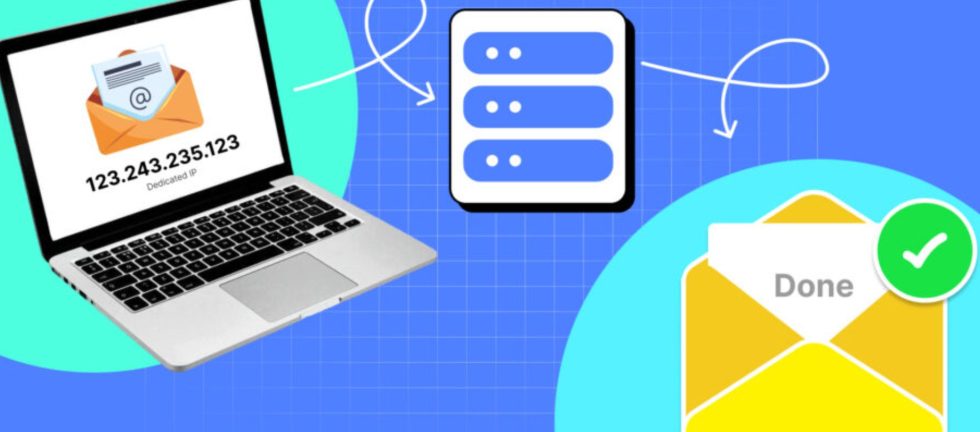
What Is a “Dedicated IP” in Email Marketing?

As you start to get more heavily into email marketing you may start to hear about dedicated IPs. To understand dedicated IPs and decide if you need one, you first need to know a bit about email deliverability and sender reputation.   An email’s deliverability depends largely on the reputation of the IP address that sends it. If you are sending from an IP address with a spic-and-span reputation, your emails are more likely to make it in front of the eyes of your subscribers. If your Sender Scores are lower, you may risk being filtered out by some inboxes.   By default most email service providers, like HubSpot or MailChimp, use a collection of shared IP addresses to process and send your emails. In shared IPs, the sender reputation is defined by the actions of all companies using the same IP. Email service providers actively monitor the health and reputation of their shared IPs to make sure their emails have high deliverability rates. For example, HubSpot’s shared IPs maintain scores in the high 90s, so our acceptance rate is very high. So What’s the Benefit of a Dedicated IP?  Some high-volume senders decide they want their own IP address for email sends so they aren’t sharing an IP with other companies. For high volume senders with engaged subscribers, a dedicated IP offers more control over the deliverability of their emails. Instead of having the reputation of their IP determined by the actions of many, they become the sole influence on whether or not their emails get delivered.   In addition to more control, many customers decide to get a dedicated IP because they don’t want a sender appendix like emailer.hubspot.com attached to their emails. In a shared IP all emails are sent by the email service provider on behalf of Company X. Dedicated IPs appear to come only from the originating company’s email address.  How Do I Know If I Should Get One? Dedicated IPs are ideal for companies that send a lot of email on a regular basis, for example, more than 100 thousand messages a week. In addition, because you’re the sole influence on your sender reputation, you need to be confident that your email list is fully permission-based and engaged. If you have higher than average hard bounce rates (3% or above) or irregular sending volumes, you might do better on a shared IP. The good news is most email service providers can talk through these options with you and help you decide what’s best for your company.  
Read more

Why Email Marketing is Still Relevant in 2022

With the advent of online marketing, advertisers developed entirely new approaches to reach customers online. Given that the way people interact and consume content online continues to evolve, so do the marketing techniques used to reach them.  Nowadays, there are more channels than ever for getting your business in front of potential customers. Approaches like social media marketing, video campaigns, and SEO to increase site traffic have become top of the agenda for many companies looking to develop their online presence.  And by the looks of it, the tried and tested strategy of email marketing still has so much to offer in 2022 and beyond.   Before social media and Google Ads, email marketing was the OG channel to reach audiences online. And email marketing remains vital for businesses developing digital marketing campaigns today.  Email Marketing’s Performance Marketing is a complicated industry filled with different metrics and statistics to assess how well campaigns perform.   But at the end of the day, your company needs to know its marketing return on investment (ROI). How much money did we spend on this marketing campaign vs how much did we make from it?   And when it comes to ROI, email marketing continues to outperform other means of online marketing. For example, litmus.com notes that ROI from marketing is estimated to be at $36 for every $1—significantly higher than other channels.    This trend is only going to continue. In the past year, engagement metrics for marketing emails in Australia are up, with both open rates and click rates on the rise. Plus, email marketing works better in Australia than in any other region.   With higher average open rates, 20.6% compared to 18% globally, and click-through rates, 3.1% compared to 2.6% globally. If these seem like minor differences, consider how many marketing emails get sent. Even a 0.5% difference results in significantly more click-throughs.  It is safe to say email marketing remains an extremely valuable marketing strategy, and it’s not going anywhere. In fact, the global email marketing industry was estimated to have peaked at 7.5 billion USD in 2020. Furthermore, with a growing global population getting online, it is projected to more than double by 2027 (17.9 billion USD).  Whatever services or products your business offers, there is a place in your marketing strategy for effective emails. They’re a direct method for connecting with customers and generating new leads.   Email Marketing vs Social Media  Email marketing came about in the first wave of digital marketing, back in the early days of the internet. It feels like it has been around forever, and many have predicted it will become obsolete, especially with the rise of social media.  It can sometimes feel like these two marketing channels are in opposition, competing to get a slice of the budget. But in reality, they are complementary strategies that work together to reach the same goal: generating new leads.   They use different mediums to reach potential customers and often target entirely different audiences. It doesn’t have to be one or the other, and social media has been around long enough that if it were going to replace email marketing completely, it would have done it already.  With social media spreading into virtually every facet of modern life, many see it as the more attractive option in 2021. However, email marketing has many benefits when compared to advertising on social media:  Benefits of Email Marketing We’ve compared email marketing to social media, but there are lots more general benefits as well.  Simple to get started Email marketing is easy to get started in. You don’t need help from a team of workers or significant technical knowledge. Just some good advertising copy and a list of potential customers to reach out to.   If you decide to take your emails to the next level using stylish design, colours, and logos, there are dedicated services out there that offer low monthly rates. Quick impact With emails travelling as fast as the bandwidth allows, you can start seeing results almost immediately. Run email campaigns to set up a time-sensitive offer and see if you can drive some quick sales.  Reach people at the right time Schedule emails to send at the time your audience is most likely to check their inbox. Statistics show in Australia and New Zealand, most emails are opened between 10 am, and 11 am.  Targeted content Email marketing allows you to send personalised content. Whether you choose to segment your mailing list based on factors such as:  Geography  Age  Engagement Level  Or just personalise your emails by including the recipient’s name. Marketing with targeted emails allows you to match the right message to the right person.  Generate site traffic Providing your potential customers with good content or offers means they are more likely to click through to your website. Email marketing is a simple way of generating traffic to your website and hopefully closing a sale. Make sure your emails contain a compelling call to action to get readers to click through.  Easily shared Emails are easily shared. With a couple of simple clicks, the reader can forward a great deal they’ve seen to their friends and family. This organically produces additional sales and grows your mailing list.   Drive sales The benefits listed plus other factors lead to improved sales for your company. Whether it is closing a large sale, thanks to helpful information in a marketing email, or an impulse buy when someone sees an email offer they can’t pass up. Email marketing boosts revenue.  Collect feedback Emails post-sale are a great way to discover how a customer’s experience with your company went. Asking for feedback through surveys or other forms allows you to find potential areas for improvement. It also keeps consumers interacting and engaging with your company, giving you a better chance to turn them into repeat customers.  Track performance Tracking the performance of your email marketing doesn’t require significant expertise. There are services out there that allow you to track every aspect of your email delivery in real-time. Measure:  Opens Clicks Conversion rates Forwards Bounces Subscriptions And more With tools like Crazy Domains email marketing software, you can access data in real-time that makes a real difference. Use it to test different subject lines and delivery schedules to see what works best for your mailing list.   High ROI We’ve already mentioned it, but it would be strange to move on from email marketing when it is the marketing channel with the highest ROI out there. Getting on average 36 times what you invest means email marketing should remain an integral part of most businesses advertising strategy.  Summary Email marketing will remain relevant in the years to come. And the best part is that every business can leverage this strategy to nurture leads and drive more conversions with their customer base.   Maximise your email marketing. With Crazy Domains Email Marketing Service, you get a dedicated specialist that will help you run impactful email campaigns that boost engagement and profit. This, on top of paying for an Email Marketing plan where you get exclusive access to our intuitive and improved platform.
Read more

What is Bulk eMail Sending Server

When it comes to sending bulk  emails, such as a transactional message (a welcome email, a receipt confirmation etc.) or a marketing one, it’s essential to rely on a professional bulk email server – that is, a dedicated SMTP server.   To put it straight, if you don’t get such a bulk email service, a large part of your emails will not get delivered. In fact, any “normal” outgoing mail server like the ones you get with common email providers (Gmail, Hotmail, Yahoo etc.) cannot support mass mailings; and that is also why their quantity of recipients and messages that can be handled per day is limited. On the contrary, Cloud SMTP Server  is strictly designed to support bulk mailing, ensuring that all your messages will get to the intended inboxes – no matter how many. For more details, pls contact us at sales@yis.solutions    
Read more