Asia 1st Internet Advertising & Digital Media Marketing Company
Digital MarketingDigital MarketingDigital Marketing
0337-7555540
sales@yis.solutions
D.H.A. Phase 7, Karachi, Pakistan

admin

  • Home
  • Author: admin
  • Page 25

5-step guide to improving SEO for your landing pages

Everyone in digital marketing has heard about SEO (Search Engine Optimization) for websites. But, did you know that you can optimize your landing pages for search as well? The reason people optimize their website is to increase their organic search traffic (unpaid traffic), which is one of the cheapest ways to attract your target audience. The same approach can be applied to your landing pages. When someone uses a search engine like Google to ask a specific question, you want to be there with the answer. If your landing page answers their question, they will reward you by becoming a subscriber or customer. In this article, we’ll share the best SEO practices for landing page optimization that are quick to implement and will make a big impact on your organic traffic and lead generation. What is SEO? SEO, short for Search Engine Optimization, is a process to make your website and landing pages more visible (rank higher) in the organic results of search engines. Why it’s important to optimize your landing pages for search engines Landing pages that are optimized according to SEO best practices will send more traffic to people who need your services. How? Search engines will better understand the purpose of your page and rank it higher in search results.A higher ranking leads to more traffic. Visitors will easily find your page when they need it the most. This improves their experience, which brings more conversions. Optimized landing pages will increase your Page Quality Rating, which brings other benefits like cheaper and more effective AdWords campaigns. When to use SEO tactics for a landing page SEO is a marathon, not a sprint. It’s important to know when it is worth implementing SEO for your landing page and when it’s not. Optimizing your web page does not reap results overnight. The improvements you make to your site will take time for the search engines to recognize. Results often take months to realize. If you are running a short-term campaign, don’t waste your efforts on SEO. You have to set your expectations for the long term. Focus your time and effort on the landing pages that you plan to keep for long periods of time (over 6 months or expect it to be seasonal). 5 steps to create SEO-friendly landing pages SEO doesn’t need to be complicated. Making a few tweaks can have a big impact on your results.  The 5 main steps to optimize your landing pages for SEO: Keyword analysis Landing page optimization Link building (earning backlinks) Page speed and mobile friendliness Result analysis and adaptation 1. Keyword analysis for landing pages The first step of SEO is keyword analysis. A keyword analysis starts with researching your industry, competitors, potential customers, and existing customers. The purpose of keyword analysis is to understand potential visitors and behavior, the possible volume of traffic and competition. Ask yourself the following questions when analyzing keywords: How are potential visitors searching for your product or service? How do you rank against your competition for targeted keywords? How much potential does your landing page or website have for organic traffic? Can your landing page compete with the current competition? Here’s how we conduct a keyword analysis Step 1: Create a list of keywords based on how people search for your product or service. If it’s a very unique product or service, you can ask people what phrases they would use to search for it. Check Google for suggested and related searches to your main keywords.     Check the keywords that your competitors use. SEMrush (free trial for 7 days) or Ahrefs (7-day trial for $7) to help you analyze keywords and give you deeper insights into your competitors For additional keyword ideas, you can use a free tool like Ubersuggest or KeywordShitter. Just enter your main keyword and get a big list of related keywords. You can also check out this Ahref’s article for even more free tools to analyze how your competitors rank for each keyword compared to your pages. Step 2: If your website has several pages, group the keywords by your website categories. This makes it easier to analyze. For landing pages, you should focus on 1 offer and one group of semantically related keywords. Step 3: Once you have your keyword list, analyze how your competitors are ranking for each keyword versus how your landing pages perform. Does your landing page match the searcher’s intent (this is extremely important)?  For example keyword “Nike running shoes”. The majority of the results are categories of Nike running shoes (with multiple selections) and reviews of the best shoes (multiple selections as well). Ranking landing page which focuses on specific pair of Nike running shoes will be nearly impossible for query “Nike running shoes” because searcher expects to see a big list of available options. What additional information does your landing page need or what do you need to delete to increase relevance? Prioritize your keywords based on their search volumes and competition. A very important thing to take into consideration is long-tail keywords. Some niches can be very competitive with big players completely taking over search results, making it nearly impossible to rank for small players. In that case, you should consider shifting your web page optimization focus from keywords that have a lot of searches and are highly competitive to keywords that are highly targeted to a very specific topic, have less search volume, are a little less competitive but can have very good conversion rates. For example instead of focusing on the topic of “landing page optimization” you may want to narrow it down to “landing page optimization for search engines“. By performing keyword analysis you will understand what long-tail keywords are being searched and which of them can be incorporated in your optimization. 2. SEO landing page optimization When you understand how visitors search for your product or service, the next step is to incorporate your keywords throughout your landing page. This is called page optimization. The main keywords should be included in your:  Headings (H1, H2 and so on) Body text  Anchor links Image alt text Metadata (page title,
Read more

THE IMPORTANCE OF DIGITAL MARKETING DURING AND AFTER COVID-19

Business owners are used to compromising and problem solving on the reg, but we can probably all agree that COVID-19 has presented unprecedented challenges. Over the last 7-8 months, businesses all over the country and across nearly every industry have been affected by the virus in many ways, from economic losses and disruptions in supply chains to the ongoing challenge of conducting operations mostly – and for some businesses completely – online.  According to Business Insider, more than 99% of all businesses are small businesses, and they employ about half the U.S. workforce. That’s a lot on the line! With no vaccine yet and “stay at home” orders still in effect in many states, the stakes remain high. So if you’re a small business owner who wants to not just survive, but potentially thrive and grow your company over the next year and beyond, you’ll need to adapt your business model and practices to fit with consumer behavior in this “new normal.”  For most businesses, it’s time to amplify your digital presence. Today’s consumers were already making most purchasing decisions online before the pandemic, but now some people rarely leave the house – which means businesses that depend on foot traffic and word of mouth are most in jeopardy.  Whether your business has had a digital marketing strategy for years or you’re unsure how to use online marketing effectively, it’s time to dial in because there are several reasons why the importance of digital marketing will only continue to grow during and after COVID-19.  PEOPLE ARE SPENDING MORE TIME ONLINE THAN EVER BEFORE Many businesses have relied on traditional forms of marketing for years to broadcast their messages to a wide audience. But with people avoiding close contact while sheltering in place, most traditional marketing channels have a much smaller audience than they did pre-pandemic. Even the most eye-catching billboards (Hello, Kris Lindahl!) won’t be as effective when people aren’t leaving their homes very often. Meanwhile, because they’re not leaving home as much, people are spending way more time online than ever before. Internet usage soared 25% within a few days in mid-March as the pandemic started forcing Americans into lockdown, a Wall Street Journal analysis found, and since then, we’ve been visiting websites, video chatting, streaming, video gaming, and connecting on social media in record-breaking numbers.  Investing in digital marketing – whether it’s online ads, social media, blogging, or all of the above – is a no-brainer when your target audience is spending a large amount of time every day online. (Learn about how much you should budget for digital marketing here.) EVENTS AND NETWORKING HAVE MOVED ONLINE Hopefully, you didn’t already have tickets to see your favorite artist or sports team in 2020. Other than Sturgis, pretty much every big event was canceled, postponed, or moved online this year, from the 2020 Summer Olympics in Tokyo to South by Southwest. More than likely, your company has had to cancel or rethink an in-person event, trade show, or conference that you normally look forward to for growth. Though it sucks not being able to connect in person right now, social distancing doesn’t have to be bad news for business when it comes to events. Many companies are finding new ways to network and bring people together online, and they’re promoting their events through various forms of digital marketing. Haven’t you noticed the uptick in posts, ads, and emails about Facebook Lives, Zoom classes, and other online events?! Until in-person gatherings are safe to resume – and even after, because we could be permanently adjusting to a new way of life – event planners will need to invest more funds and resources into digital marketing strategies. When done correctly, digital marketing can actually make events easier! PEOPLE USE SOCIAL MEDIA FOR BUSINESS AND FOR PLEASURE More than half of the people on earth now use social media, Hootsuite says. And that number is still growing! People are also using a wider variety of social media platforms than ever before, with the latest data from GlobalWebIndex showing that the typical user belongs to almost nine different platforms. It’s pretty obvious then why more and more companies are prioritizing social – it’s one of the best ways to reach your target audience! Sure, most people sign up for Facebook, Instagram, YouTube, and other social platforms looking to connect socially, but they also use social media to look up reviews, check out new products, and see how different brands interact with their followers.  More than ever, it’s important for your company to be active on at least one platform.  THE DIGITAL ECONOMY IS BOOMING Since the invention of the internet, e-commerce has grown exponentially, putting a strain on traditional brick-and-mortar stores. As we move forward and deal with the effects of COVID-19, the digital economy IS the economy. We don’t want to sound dramatic, so we’ll leave that to Axios, who’s calling the coronavirus a “retail apocalypse.” “Because of the coronavirus and people’s buying habits moving online, retail stores are closing everywhere – often for good,” Axios says. “A research report from UBS predicts that 100,000 brick-and-mortar U.S. retail stores will close by 2025, in a trend that started before the pandemic and has accelerated amid coronavirus-related shutdowns.” If household names like Nordstrom, Bath & Body Works, Gap, and Zara are shuttering a large number of stores for good, we think it’s safe to say that online storefronts, websites, and social pages will continue to be the new way of life when it comes to shopping.  If you own an e-commerce business, you’re well aware that the quality of your website plays a pivotal role in your success. But even if you’re not selling products, you’ll need a great website and a comprehensive digital marketing strategy to ensure you’re reaching potential customers when they’re looking for brands like yours online.  LET’S REVAMP YOUR DIGITAL MARKETING STRATEGY! Having a digital marketing strategy for your business has only grown in importance over the years as the online world grew. Now with the pandemic, the internet has
Read more

Why Is Remarketing A Must In 2022?

More Leads & Conversions You want to make sure you are converting people who are already in the market for your stuff and also generate leads to expand your market. This is your low-hanging fruit. Though there are other tactics, search remarketing is an easy way to do both. Save Cost Remarketing is not free – but nothing that drives effective, real growth is. It is cheaper to convert someone interested than spending on cold ads. Improved Brand Recall After implementing remarketing, we saw a serious increase in direct traffic and people who found our site by searching for the company brand. Maximize Your Marketing ROI In an ideal world, a customer would search for you, visit your site, never be distracted, spend time exploring your content or product pages, sign up, buy, and become a loyal customer forever. But this isn’t one which is why we go as granular as possible to develop a remarketing guide for your business to ensure you reap maximum benefits from your marketing efforts. Higher Visitor Engagement It’s critical to start converting your audience into more engaged fans and advocates so that you can grow your following. Remarketing is the tactic of serving targeted ads to people who have already visited or acted on your website or mobile app. It can be an excellent and cost-effective way to increase your sales conversions because you are reaching out to customers who have already expressed interest in your products or services. Google and Bing along with social media are some of the most common platforms for remarketing and thus Google Remarketing Campaigns along with Bing Remarketing Campaigns, generally referred to as Search Remarketing Campaigns are some of the most sought after. Steps To Build A Remarketing Campaign Identify the high-value pages Consider offering special coupons and deals for your retargeted consumers Consider how long you want to follow your past visitors with the ads Consider targeting your post-conversion customers with remarketing campaigns Target broader keywords Monitor your campaigns and make adjustments as needed
Read more

What is Bulk eMail Sending Server

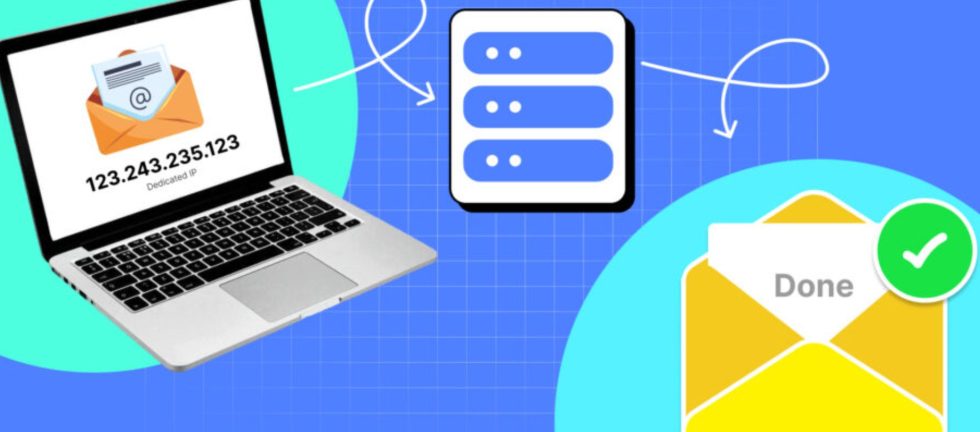
When it comes to sending bulk  emails, such as a transactional message (a welcome email, a receipt confirmation etc.) or a marketing one, it’s essential to rely on a professional bulk email server – that is, a dedicated SMTP server.   To put it straight, if you don’t get such a bulk email service, a large part of your emails will not get delivered. In fact, any “normal” outgoing mail server like the ones you get with common email providers (Gmail, Hotmail, Yahoo etc.) cannot support mass mailings; and that is also why their quantity of recipients and messages that can be handled per day is limited. On the contrary, Cloud SMTP Server  is strictly designed to support bulk mailing, ensuring that all your messages will get to the intended inboxes – no matter how many. For more details, pls contact us at sales@yis.solutions    
Read more

3 critical PPC lessons from 2020 for a brilliant 2021

With the right tools, PPC pros can set the strategy for automations to follow when unexpected shifts happen. The past 10 months or so have given PPC pros a crash course in adaptability, ingenuity and nimble marketing. Those who thrived in pandemic-era PPC deserve some sort of advanced honorary degree in “PPC’ology.” In many instances, smart, effective PPC has literally saved brands from the brink of devastation.  But let’s face it, PPC pros have been in a near-constant state of reinvention since PPC first became a thing. Compared to other marketing disciplines such as print and broadcast, we’re in our adolescence at best, which is actually an exciting place to be. 2020 just made us do a lot more reinventing and adapting in a very short amount of time.  The tumult of the past several months may be a hidden blessing. Smart PPC pros are now well-positioned to use the tools at their disposal to help brands ride a wave of recovery while adapting to new normals in the way people use search to do commerce.  PPC automation: 2020’s lessons for a banner 2021 We’ve discussed the power and pitfalls of PPC automation at great length over the past year, in particular. It was the main topic of our October 21, 2020 Search Engine Land article and was a recurring topic during our now-bi-weekly, virtual PPC Town Hall, which launched in response to the pandemic.    Now, we want to advance the discussion beyond how we work in highly automated channels and tie in lessons learned during the wild and unpredictable months of the recent past. Sure, automation makes it easy to do basic PPC, but it also makes it easy to be lazy. Don’t be lazy. Take some cues from 2020 and learn to adapt and be great. Predicting and responding quickly to behavioral changes using a smart mix of automated tools and manual controls can keep you ahead of the pack. Lesson 1: Homebodies still do commerce Early in the pandemic, many people feared that economic and employment concerns would wipe out spending. In many instances, it did the opposite. Pandemic purchasing skyrocketed in many areas. Those who anticipated the shifts won.  More time at home led to more spending on home improvement, home office goods, consumer electronics, landscaping services, and other things to make quarantining more bearable.  Closed gyms led to skyrocketing demand for bicycles, home fitness gear, kayaks, and online health coaching.  Less air travel and more ground travel helped push people to get a nicer ride. Auto dealers who understood changing motivators and used tools like Campaign Automator to prioritize the right inventory cashed in big during 2020.  Many indicators show that a lot of companies and employees now embrace more flexibility and remote working arrangements. People have enjoyed gaining back an hour or more of their day otherwise spent in traffic jams. And as we saw from the points above, people naturally try to make the best of their situation. It’s this combination of factors precipitated by what happened in 2020 that may well lead to a permanent shift in how people engage with brands and conduct commerce (on and off company time).    As PPC pros, we can thrive by focusing more on our strategic roles and letting the machines handle the tedious and repetitive button-pushing that we once did ourselves. But let’s be clear, humans are an essential part of the formula for PPC success in 2021 and beyond. As consumer behaviors continue to morph in unexpected ways in reaction to societal and pandemic-related forces, the machines cannot succeed on their own—artificial intelligence and machine learning use historical trends and data.  While the machine can change bids in response to external factors impacting conversion rates, it cannot decide that a company should change its distribution model and rewrite all their ads to highlight a significant new trend in 2020: BOPIS (buy online, pick up in-store). A big lesson from 2020 was that rapidly changing dynamics on the ground can send signals the machines can use to avoid wasted ad spend, but not always in ways to help businesses capture new opportunities.  PPC pros have an opportunity (and a responsibility) to master the tools at their disposal AND apply deeper strategic insight to ensure the machines are doing the best they can to reach audiences through paid search.  Relying solely on the platform tools won’t work in 2021 and beyond. The native, disparate automations within Google, Bing, Amazon, and Facebook can certainly work for basic paid search. Still, they are not well suited to the needs of advanced PPC marketers who strive for stellar results.  The evolving landscape for digital marketing in 2021 will require PPC pros to remain at the forefront of developments and opportunities. PPC rockstars will be those who maximize all the tools at their disposal this year. Lesson 2: People LOVE convenience, making eCommerce an omnipotent king Okay, on the surface, the importance of convenience is self-evident. But during the past several months, the desire for safety and security made people double-down on the need for ease and convenience. Smart PPC marketers are looking more holistically at their marketing mix. Some things to consider:  The notion of “search” extends way beyond Google and Bing. Searches are happening everywhere, including Amazon and Facebook (Marketplace, in particular).  People don’t just search on one channel. They may start in Google before searching for an equivalent used item in Marketplace, and then may look to purchase from convenience-leader, Amazon.  The shift to remote work gave most people a lot more screen time. Some may have even done a little shopping on company time! (and will likely continue to do so).  People need to eat. Many might avoid indoor restaurants for a long time to come, but they might have fallen in love with restaurant food delivered to their door.  Being a one-trick PPC pony doesn’t cut it anymore. Cross-channel PPC marketing is where the winners soar. Effective, unified campaigns managed from a single interface put more power in PPC marketers’ hands to
Read more

Bulk Email Server in Pakistan

Bulk Email Server in Pakistan DMB, SMTP IP eliminates the complexity and expense of building an in-house email solution or licensing, installing, and operating a third-party email service. DMB Offer’s Sending bulk or high volume email presents unique challenges for businesses, ISPs and email hosting companies. To accommodate bulk email sending,DMB provides Dedicated SMTP IP for e-Mail Marketing. High volume BULK SMTP IP Server Features; DKIM/Domain Keys Signing Dedicated IP with each account rDNS Sender Policy Framework (SPF) Simple Integration with your application IP rotation on demand High-performance dedicated bulk email marketing servers for both small and large volume email marketers. Our email sending servers are located in a datacenter that offers the highest security available, and are perfect for companies that want to focus on their email marketing campaign and not on bandwidth and the email sending server. Corporate enterprise environments requiring a dedicated IP address and server using advanced tools and features , 24/7 support, high availability… Features Starter Basic Medium Set up Fee Free Free Free Monthly e-Mail Volume 300,000 1,000,000 2,000,000 Ded. RAM 1GB  2GB 3GB  6GB 5GB  10GB Bandwidth .5TB 1.5TB 4.5TB Ip reputation Yes Yes Yes Dedicated IP(s) 1 1 2 Free IP Replacement – – 1 Domain Keys (DKIM) Yes Yes Yes rDNS Yes Yes Yes SPF Yes Yes Yes Monthly Price PKR 9,999 PKR 18,399 PKR 24,999 Features Business Professional Premium Set up Fee Free Free Free Monthly e-Mail Volume 5,000,000 10,000,000 Unlimited Ded. RAM 8GB  16GB 12GB  24GB 24GB  48GB Bandwidth 8TB 12TB 24TB Ip reputation Yes Yes Yes Dedicated IP(s) 3 4 5 Free IP Replacement 1 1 2 Domain Keys (DKIM) Yes Yes Yes rDNS Yes Yes Yes SPF Yes Yes Yes Monthly Price PKR 33,499 PKR 40,499 PKR 63,099 Introducing our NEW Budget Package Features Budget Package Set up Fee Free Monthly e-Mail Volume 100,000 Ded. RAM .05Gb Bandwidth .05TB Ip reputation Yes Dedicated IP(s) 1 IP Replacement No rDNS  Yes Monthly Price PKR 7,999/- Make the Difference One Dedicated IP . rDNS. Domain Keys (DKIM). SPF Records. Send your messages in both Text and HTML format. All email broadcasting is routed through our bulk email servers and bandwidth – not yours. Broadcast your bulk email marketing campaigns anytime from any location in the world. Port 25 of your ISP not required (not affected by port 25 blocking issues) Reliability and 100% Bulk Friendly Guaranteed! No hourly or daily limit!! SMTP Integration? Dedicated SMTP IP provides you with the ability to integrate an SMTP IP into CMS, CRM, or another system like Atomic Mail Sender, SendbBlaster , Outlook etc and send emails to the customers from your own system. SMTP limit and eMail Rate limits If you run a web site and you plan to send out mass emails (for example, a newsletter), it is advisable to send the emails using an authenticated SMTP mail server your outgoing emails will not trigger anti-spam filters set to identify phishing emails or spammers. However, to prevent spam, many web host providers enforce email send rate limits to their customers. S.No Provider Limit 1 GoDaddy 250 email messages sent per hour 2 Blue Host 150 email messages sent per hour 3 Gmail 500 email messages sent per day 4 Hotmail 100 email messages sent per day 5 Mocha Host 250 email messages sent per hour NOTE; 1. Account will be immediately Cancel if any Client will be found in Prohibited Activities. 2. SMTP IP specially designed for Corporate Sector or Corporate eMail Accounts. We will not responsible if emails are / will landing in Junk Folder of Hotmail, Gmail, Yahoo or any other Free Email Service Provider. 3. Before Server delivery we will test your Dedicated SMTP IP with 10/10 score on mail-tester.com (leading spam score and  content quality checker) 4. We are completely compliant with the CAN-SPAM Act of 2003. – Spam is evil. No one wants it, and we simply do not allow it. 5. In case of Service Cancellation within 2 working days services charges are refundable except Domain & IP Price. 6. We strongly urge you to use double opt-in policy. Frequently Asked Questions; Why I need a exclusive domain for server? We need a unique domain so we can set all resources correctly. How much messages can I send per hour/day? No hourly / daily limit. Do you guarantee inbox of email? We do not guarantee arrival in the inbox as this depends on the content sent and how the campaign was made, but we guarantee the perfect setting for all required signatures. Do I get access to demo? No, We do not offer servers for test drive. Cause Its Dedicated SMTP and resources.
Read more

Landing Page Guide

Landing page is a webpage calling the customers to action regarding the product you are trying to sell or getting signups. If done the right way, landing pages can get you high rates of conversion.This comprehensive guide on landing pages will tell you: Landing Page and Its Importance How To Build A Landing Page Landing Page Template What is a landing page? A landing page is specifically designed webpage that facilitates a certain action that could be signing up for a newsletter, going to website’s checkout etc. Landing page is made for a specific task and avoids any other distractions or links that might distract the potential customer away from this webpage. Our potential customer is directed to this page through ads on Google, Facebook, Instagram etc. or from email newsletter. Since your visitors land on your page from external sources, this page is called a landing page. It allows you to gather a visitor’s information, make sales etc. If you have forms for collecting information on homepage or other webpages, it does not make it a landing page. Landing page serves only one purpose while a homepage can have many other purposes. Since a landing page in needed to get conversions, it is important that all websites should have them. Why is a landing page important? Since the visitor lands on your page from an external source, you do not want him to be distracted by extra messages or links that can take him away from the page without having filled its purpose. A short, concise, to-the-point text and call-to-action is what is needed here. What you don’t need is distraction that can drive the visitor away towards something else. It is this focused call to action (CTA) that leads to conversion and this technique is often used in marketing and advertising campaigns for a boost in sales. The landing pages get you greater number of conversions because they are targeted to a specific group. You gather data on people through landing pages which are then used for targeted marketing bringing in high rates of conversion.More landing pages on one website translates to higher number of conversions. How do landing pages work? When someone sees an advertisement and is interested in it, the person follows the link to find itself on a landing page. Depending on your objective and product, you might have a shopping cart or a form that collects information. This collected information makes this person a lead whose data is collected into your database. You can use this database to do targeted marketing to people who you know are interested in your product and will be willing to make a purchase. Certain marketing tools like HubSpot on your website can gather other information about your leads like what offer they converted on, when and what else they did on your website. This can further help classify your leads. What is the difference between a normal webpage and a landing page? A normal webpage can have a number of available options to be pursued, or let’s say distractions in case of landing page. A normal webpage or a homepage lets you explore more of your website, your products and services. A landing page’s purpose is not to let the visitor explore at this stage but to get you to sign up. A landing page must have one path to be followed and one CTA otherwise it cannot be a landing page. Another characteristic of a landing page is that the visitor finds what he is looking for with just a click i.e. that landing page. He does not have to look for the desired webpage by himself. What you need to prepare for landing page development? Now that you know why a landing page is important for your business, the next step is to figure out how to develop it. Before moving on to understanding the actual process of development of landing page, it serves well to know following things about your business. 1. Know Your Goal: In order to get greater conversions, your pitch must be very attractive and focused.If your goal is not properly determined, your strategy might not be as focused as you would like it to be. You need to first decide what is it you are after.What product are you marketing in this particular landing page? What will people do once they land on your landing page? Will they buy your product? Will they sign up for your email list or your newsletter?Decide what you want to offer and what your visitors expect to experience. 2. Audience and Their Expectations: Knowing your audience and their expectations helps a lot in figuring out what is best for your landing page.What you put out on your landing page will be more attractive to your potential audience if it relates to their aspirations. This can only be done by knowing your audience.Also learn your audience is coming from i.e. ads from Google, Facebook etc. as you might want to tailor your landing page according to your audience group. 3. Know Your Competition: You should research what your competitors are doing and how it is helping them. If a strategy is helping them grow their business, you should also apply it in your business. How to build a landing page? There are certain factors you must take into account to produce a great landing page that attracts audience as well as produces leads. Attracting audience is not enough. If the content and design of your landing page is not up to the mark, you might not be able to sustain traffic.It is important that you take following factors into account while designing a landing page. Short, Focused Content Your content should be short and focused on the goal of converting traffic for your product. There is only need for information that is necessary to proceed to the next step. The content should be persuasive and clear in its message.A page with multiple intents will take
Read more

10 Ways Website Structure Can Affect SEO

The way a site and its pages are organized can impact SEO visibility more than you realize. Learn how to address common site structure issues here. Optimizing your website for traffic, revenue, and conversion is one of the most essential parts of SEO. In 2021, success means going beyond having a neat and glossy design that sometimes can be a hindrance in terms of how search engines view and crawl your website. Conventional flat site structures are always popular. But last year Google’s John Muller, in a Webmaster Hangout, did hint a hierarchical site architecture could provide Google better indicators on: What the pages on your website mean. How each page is related and connected. With differences in design and website structure principles, a designer and an SEO pro’s opinions can vary considerably. Striking a balance between a visually aesthetic website for customers and a structure architected for search engine visibility should be the ultimate goal. And having an organized website structure is incredibly essential for SEO. Without creating something that makes logical sense, your other SEO, content, and even design efforts may be for nothing. A good website structure should have a significant impact on SEO traffic and conversion. It should also help your whole organization engage better with users and create an experience aligned with your business goals, product, and service structure. In this article, I share some key points to consider as to how website structure affects SEO. 1. Site Crawlability Site crawlability is one of the most important factors when it comes to website structure. Crawlability refers to a search engine’s ability to crawl through your website’s entire text content to figure out what your website is all about. Part of this process is navigating through subpages and particular topics to understand the website as a whole. A webpage has to take a visitor someplace else within the website, from one page to another, to be considered crawlable. Search engine robots are responsible for website crawling. An important tenet of good website crawlability is that there are no dead ends while crawling through your website. Make a concerted effort to include internal links on every page, which creates a bridge from one part of your website to another. Breadcrumbs, schema, and structured data formats all help here. Ensure you know and track your Google crawl budget, too 2. URL Structure One of the essential factors relating to how website structure affects SEO comes back to the URL structure. URLs are also the building blocks of an effective site hierarchy, passing equity through your domain and directing users to their desired destinations. The best URL structures should be easy to read by a user and a search engine and contain target queries, so they are content-rich. Effective structures replicate logic across your whole website and submitting an XML sitemap to search engines with all of the most important URLs you want to rank for also helps. Try to keep URLs simple and don’t over complicate them with too many parameters. 3. HTTP, HTTPs, HTTP2 HTTPS ensures your website security, and as Google continues to make it part of the user experience having a secure site can also help boost your rankings. This is why more than 50% of websites worldwide are using HTTPS already. Switching to HTTPS has multiple benefits in addition to better rankings. Better user experience. Protection of your users’ information. AMP implementation – only viable with HTTPS. PPC campaign effectiveness. Improved data in Google Analytics. As of November 2020, Google will start crawling some sites over HTTP/2. 4. Internal Linking The basics of proper navigation dictate that users should get from one page to another without any difficulties. If your website is large and has many pages, the challenge is making these pages accessible with only a few clicks, using navigation alone. Usability experts suggest that it should only take three clicks to find any given page, but use this advice as a guideline instead of a rule. Internal linking helps users and search engines discover a page, and much like a messaging house build helps provide a flow between content and pages. Pages that are not linked are harder for search engines to crawl. Categorize and organize links in a way that won’t wreck your website structure. Internal linking works by using keywords within your content and linking them to another relevant piece of content on your website. The advantages of consciously using internal links for SEO are numerous: Internal linking allows search engines to find other pages through keyword-rich anchors. Internal links decrease page depth. Internal linking gives users an easier way to access other content, resulting in a better user experience. Search engines give greater value to internal links regarding ranking on search engine results pages (SERPs). Frequently, people will link back to old content through the use of internal links. However, most people rarely do the reverse – going back through old content to link to newer content. Close the loop by making sure both pieces are connected through the use of internal links. 5. Key Content & Keywords Content and keyword research are fundamental parts of SEO and should be an essential part of how you build and structure your website from the get-go. Ensuring this is done ensures your understanding of your target audience, search behavior, and competitive topics are built into your website structure and layout. The best websites ensure they have provided a great user and a great search engine friendly experience by ensuring their website’s most crucial content is central to the structure and is of the highest quality. 6. Duplicate Content Duplicate content is harmful to SEO because Google interprets it as spam. A focus on high-quality and unique content on the SERP clearly defines how your website must be structured for ideal SEO. Google’s Search Console is a useful tool for finding and eliminating duplicate content on your website. It may be possible to repost duplicate content on LinkedIn or Medium but do so with caution. As a more general rule, don’t post duplicate content on your website or anyone else’s. 7.
Read more

Email marketing trends – 5 trends to watch

Industry experts explore the email marketing trends set to impact your strategy in 2021 – 2022  and consider how COVID-19 has permanently and positively changed email marketing  In 2020, email marketing has, like so many parts of our work and personal lives, had to undergo a rapid transformation.  As the pandemic continues to lead to wide-ranging changes to the way consumers perceive brands and consider purchases, email marketers have adapted in many innovative and inspiring ways. In this blog, five of the brightest minds from the world of email marketing provide their key trends for 2021. With email continuing to play a vital role in nurturing, acquiring and retaining customers, it’s time to explore the opportunities that lie ahead. Email marketing through the K-shaped COVID-19 recovery As we head into 2021, COVID-19 continues to impact marketing strategies and budgets within organizations of all sizes and industries.  Its impact on different nations and demographics has been hugely varied. In the marketing world, this has also been the case – as some COVID-proof industries have prospered, others have been forced to shut their doors, drastically cut budgets and enter survival mode due to the restrictions put in place. McKinsey analysis shows just how that is expected to play out for different sectors, with the recovery potentially taking more than five years for the hardest hit. With this data in mind, it’s clear that there’s no longer a “one-size-fits-all” solution when it comes to managing your email marketing in 2021. Yes, there are innovative email marketing solutions and tools all around us, leading us ever closer to being able to deliver 1-to-1 personalization across our digital marketing through the use of AI.  However, for many of you, investment in these kinds of technologies may not be possible right now (nor was it on the cards pre-COVID). You need to search for tactics that are right for your business.  “Email marketing trends in 2021 will be driven by the K-shaped recovery from the pandemic that has seen some companies excel while others struggle.  Grocers, e-tailers, digital entertainment providers, tech providers, and other companies that have done well will focus on better personalization, segmentation, and automation as they inch closer to achieving the 1-to-1 marketing paradigm.  Some of those improvements will come from advanced analytics, while others come from artificial intelligence and machine learning, which they’ll also use for send-time optimization and RFM- and activity-based modeling. Meanwhile, airlines, hotels, cruise lines, traditional retailers, and other companies that have been hurt by the pandemic will focus on improvements to efficiency, essential optimizations, and A/B testing and analytics to try to adapt to the changing customer behaviors.  They’ll invest in switching from traditional email templates to modular email architectures to reduce production times, improving the inclusiveness and usability of their designs to increase engagement and widen their audience, and enhanced omnichannel experiences like curbside pickup to better leverage their physical real estate.  This group will use less live content and CSS-based interactivity, and actively avoid unproven and time-intensive technologies like AMP for Email, which balloons production cycles and complicates quality assurance efforts.” Strategy first, solution second Your company size, sector and digital maturity will have all played a role in determining how your email strategy has needed to shift over the course of 2020. That will hold true in 2021 as we aim to emerge from COVID and enter into the recovery phase. As that happens, it’s crucial that strategies are suitably mapped out. Then, businesses can start to consider investing in new technologies and solutions that can help them achieve specific goals. While AI is a hot topic among digital marketers at the moment, don’t be fooled into thinking it’s a must-have if your strategy doesn’t truly require it. AI is of course already delivering significant improvements for some businesses. As Tim Watson explains, the principles behind email marketing will remain consistent whether you’re in a position to invest in AI technology or not. “The fundamental principle behind email marketing will never change. Send the right message, to the right person at the right time. No brand marketer sets out to send an unwanted email. The difficulty is; to know what the right message is, for whom and when. “Right message, right person, right time” is a theoretical concept that can never be achieved – humans are too unpredictable, when even partners can’t predict what their other half will do. But technology is continuing to help edge us closer. The AI hype is now being replaced by a quieter AI revolution. AI technology is a very long way from “do it all and do anything” intelligence – so called “general AI”. Try asking amazing AI self-driving car technology a basic email marketing question. It won’t have a clue. AI solutions can only perform specific niche tasks for which they have been created. But in those niches, they can be very powerful. After the AI hype, the trend is back to strategy first and then finding the right solution fit, rather than buying something because it has an AI technology sticker. Existing, proven email marketing solutions are being upgraded under the hood to add or replace older algorithms with AI based methods. Marketers can focus on better marketing, picking solutions based on strategy fit. When the solution has AI under the hood it’s at most nice to know rather than a core driving factor.” Bringing customer experience into email marketing Customer experience (CX) is now widely recognized as a key part of the overall digital marketing mix. HubSpot defines it as the following: “Customer experience is the impression your customers have of your brand as a whole throughout all aspects of the buyer’s journey. It results in their view of your brand and impacts factors related to your bottom line including revenue.” Seamless user journeys must be combined with the kind of experience a consumer would expect face-to-face. Long gone are the days of cold, hard selling: just like website visitors, email users expect to be treated
Read more

How to Set and Reach Social Media Goals for Your Business

How to Set and Reach Social Media Goals for Your Business There’s no doubt social media marketing is working for businesses of all types. But still, a lot of brands feel that determining the true ROI of a social media campaign is not easy. And that has led them to shed social media marketing strategies altogether. However, the truth is, social media marketing is like any other type of digital marketing, where it is very much possible to measure KPIs such as ROI. Although it may prove to be challenging for some, especially to those businesses that do not have access to the right resources. According to an survey, 41% of businesses said that they did not know how social media channels were helping them get favorable returns. So why is it so difficult for brands to measure the financial impact social media sites have on their business growth? The answer is lack of proper goal-setting. When you create a social media strategy, you want to have utmost clarity as to how you will achieve results. But without the right type and specific goals, you would not have any proper direction, making your overall social media presence weak. Studies show that social media marketing spending in the United States alone is expected to increase from $7.52 billion in 2014 to $18.58 billion in the year 2021. However, all this spending can only give great returns in the long run when businesses know exactly and have already set social media goals to aim for. In order to make your social media marketing journey smoother, your business needs to… Set strategic, specific goals that are attainable and easy to measure at every step Have a strong commitment towards creating quality social media content. Leveraging social media is not rocket science. It definitely works, as long as it goes hand in hand with your current business growth strategies, which is why successful social media marketing requires you to equally focus on… An understanding of your target audience The creative aspect of posting content Having a strong attention to detail The right level of data crunching Long term vision of your business In order to make social media work consistently and ensure that you are clear in all the above areas, you need to create strong social media marketing goals for your business. Step #1: Know Your Main Objective Your social media objective is tied in with your social media goals, but it’s not the same as them. Your main objective gives direction to your social media marketing and clarity on what to achieve. It comes much before your goals. It doesn’t matter what kind of business you are running, e-commerce, service based, knowing your objective definitely pays. Whether it is to improve your revenue numbers with the help of social media, or you want to establish your brand as an influencer in your industry, or drive traffic to your website, you need to be clear on what to focus on and identify the steps that will lead you to attaining your objective. When you have firmly established your core objective, you will use your social media goals as a roadmap to achieving them. While your objective is broad, your social media goals deal with the specifics. They are about those small details that ultimately lead to success. The bottom line is, you have to determine your objective at any cost or else your goal setting will be out of place. You want your social media marketing goals to be strong and achievable, but ultimately they have to stand on a firm foundation, which is your main business objective. Step #2: Set SMART Social Media Goals Achieving your social media goals becomes easier when you follow a proven framework. While there are many goal-setting techniques out there, one that stands out from the rest is the SMART goal-setting method. Using which you can create goals that are not only worthy, but also practical. Goals that follow the SMART framework are… Specific: The more clear and defined your goal is, the better. Measurable: You should be able to track and measure your goal. Achievable: Is your goal really achievable? Or too far fetched? Realistic: Your goal needs to be practical and realistic in terms of the resources you have. Time Sensitive: Whether long-term or short-term, your goal has to have a clear time frame. Your social media goals can be of any size or scope, you should first take a bird’s view of them. Instead of asking yourself what you’d like to achieve this week, try to envision what your business wants to accomplish in a year. Also, it’s always a good idea to ensure your social media goals are in sync with your company’s mission statement. Here are a few examples of social media goals that are broad enough: Achieve a higher social media ROI Boost brand awareness and visibility Build and strengthen with prospects/customers Increase store walk-ins and in-person sales numbers While it’s a noble idea to customize your goals for each social network you are in, it can prove to be daunting in the long run. So it’s recommended that you start off with one main goal and pursue other more customized goals as you move forward and grow. Step #3: Conduct a Social Media Audit One of the most important tasks you need to take care of, even before setting your social media goals, is to establish your baseline targets. Or else your social media marketing will prove to be weak and ineffective. By conducting a proper social media audit, you will not only establish these baseline targets, but also ensure that each goal you set is laser-targeted. So what exactly do we mean by a social media audit? According to HubSpot, “A social media audit is a regular examination of social channels that represent your brand — including both your business’ owned profiles and impostor accounts ” You may already be putting enough effort into social media marketing, but is it as effective as it should be? Conducting a social media audit allows you to
Read more