Asia 1st Internet Advertising & Digital Media Marketing Company
Digital MarketingDigital MarketingDigital Marketing
0337-7555540
sales@yis.solutions
D.H.A. Phase 7, Karachi, Pakistan

Blogs

What Is a “Dedicated IP” in Email Marketing?

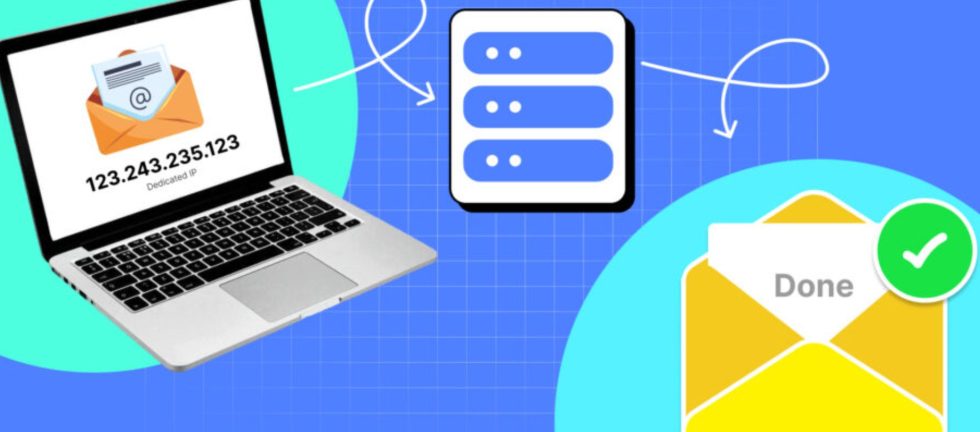
As you start to get more heavily into email marketing you may start to hear about dedicated IPs. To understand dedicated IPs and decide if you need one, you first need to know a bit about email deliverability and sender reputation.   An email’s deliverability depends largely on the reputation of the IP address that sends it. If you are sending from an IP address with a spic-and-span reputation, your emails are more likely to make it in front of the eyes of your subscribers. If your Sender Scores are lower, you may risk being filtered out by some inboxes.   By default most email service providers, like HubSpot or MailChimp, use a collection of shared IP addresses to process and send your emails. In shared IPs, the sender reputation is defined by the actions of all companies using the same IP. Email service providers actively monitor the health and reputation of their shared IPs to make sure their emails have high deliverability rates. For example, HubSpot’s shared IPs maintain scores in the high 90s, so our acceptance rate is very high. So What’s the Benefit of a Dedicated IP?  Some high-volume senders decide they want their own IP address for email sends so they aren’t sharing an IP with other companies. For high volume senders with engaged subscribers, a dedicated IP offers more control over the deliverability of their emails. Instead of having the reputation of their IP determined by the actions of many, they become the sole influence on whether or not their emails get delivered.   In addition to more control, many customers decide to get a dedicated IP because they don’t want a sender appendix like emailer.hubspot.com attached to their emails. In a shared IP all emails are sent by the email service provider on behalf of Company X. Dedicated IPs appear to come only from the originating company’s email address.  How Do I Know If I Should Get One? Dedicated IPs are ideal for companies that send a lot of email on a regular basis, for example, more than 100 thousand messages a week. In addition, because you’re the sole influence on your sender reputation, you need to be confident that your email list is fully permission-based and engaged. If you have higher than average hard bounce rates (3% or above) or irregular sending volumes, you might do better on a shared IP. The good news is most email service providers can talk through these options with you and help you decide what’s best for your company.  
Read more

16 Steps of Customer Acquisition Process for Digital Marketers

Welcome to have a better understanding of the customer acquisition process in digital marketing. Following article provides you information about what customer acquisition means. You will see if there is a difference between customer acquisition and customer engagement.  And lastly, you will find the exact answer to the question of what are the steps to follow for experiencing a successful customer acquisition process! Table of contents: What is Customer Acquisition? Customer Acquisition vs. Customer Retention 16 Steps for Customer Acquisition Process 1. Define Your Business Strategy 2. Pre-estimate Customer Acquisition Cost 3. Create Your Target Market 4. Decide on Right Acquisition Channel 5. Hire Trained and Talented Staff 6. Build Optimizable Web Pages 7. Use Content Marketing to Acquire Customers 8. Manage Social Media Marketing 9. Practice Search Engine Optimization 10. Attain Customers with Email Marketing 11. Create Your Product Demand 12. Acquire New Customers with Popups 13. Build a Sustainable Relationship With Customers 14. Ask for Customer Stories 15. Run a Referral Program 16. Show Testimonials Customer Acquisition Process Infographic What is Customer Acquisition? Customer acquisition is a process to induce visitors to become one of your customers. You need to figure out which inbound strategies (content marketing, webinars, social media marketing, etc.) fit best for your target audience, then constitute an implementation plan accordingly. Customer acquisition process depends on the strategies containing methodologies to execute customer inquiries. Example strategies may be given as email list building, customer referrals, and so on. Customer acquisition is a process to induce visitors to become one of your customers. Acquisition techniques change in accordance with technological developments. There must always be a room for optimization and upgrading the ways of marketing practices to stay in the competition and get a high acquisition rate. Customer Acquisition vs. Customer Retention The difference is basically that customer retention aims at nurturing the relationship with current customers, whereas customer acquisition has the goal of gaining new customers.Obviously, you cannot run a business without having new customers; this is why customer acquisition process is a very monumental challenge to handle with in the first place. As the number of customers begins to increase, raising your brand awareness, producing dedicated help, and managing loyalty programs become very vital for substantial growth and maintaining a competitive edge. The difference is basically that customer retention aims at nurturing the relationship with current customers, whereas customer acquisition has the goal of gaining new customers. There is no reason to claim that one of them is more important than the other one. The vitality of each depends on the timing! When you first established your business, customer acquisition is necessary to build a customer base. Once enough number of customers are obtained, customer retention becomes incredibly fundamental to keep increasing revenue. Hence, on average, 80% of a company’s income comes from 20% of its existing customers. 16 Steps for Customer Acquisition Process You need to answer a few questions before managing the acquisition process; Are my products ready for all target market? Would customers acquire a pleasant experience from my online store? Is my server for online store ready to get high traffic? Is my support team qualified enough to respond to customer inquiries? If you can answer all questions above as ‘yes,’ let’s begin our profound journey of obtaining and keeping new customers! I know, customer acquisition process is not an easy job, but you can follow the below steps and build up an effective acquisition plan to attract your prospective customers; 1. Define Your Business Strategy Start with defining a business strategy after making a SWOT analysis for your customer acquisition process. Those strategies can be maximizing sales, increasing brand awareness, obtaining loyal customers, and so on. Then, stick to your strategy while focusing on strengths and improving weaknesses to increase the efficiency of your efforts during the process. 2. Pre-estimate Customer Acquisition Cost Estimate the total cost that you are willing to bear to implement the process before initiating your efforts. Then, set expectations for return on investment according to your customer acquisition budget. Usually, cost of customer acquisition (CAC) determines how much value a customer will bring to your business. Thus, do not forget that this cost is vital to define customer value, and the ultimate aim is to gain a high ROI. What is customer acquisition cost (CAC)? Customer Acquisition Cost (CAC) calculation is as; (Marketing Costs + Sales Costs + Salary Expense) / (Number of New Customers) 3. Create Your Target Market Define potential or targeted customers. Figure out who they are, how to gain them, how you can communicate with them, and how you will market your products to them. Predefining those customers will help you in getting the competition. 4. Decide on Right Acquisition Channel Find ways to contact your target customers. Do researches, conduct surveys, collect email addresses, and use analytical tools to find the right customers for your products. After that, segment them according to their wants, needs, and behaviors. Then, reach through various channels according to the characteristics of each segment. 5. Hire Trained and Talented Staff Hire dedicated and hardworking staff. Make sure they can manage the process, understand the customer needs, and take significant responsibilities. Also, ensure your support team can tackle any unforeseen circumstance and to remain calm against customer complaints. 6. Build Optimizable Web Pages Have landing pages directing users to buy your product or service, when it comes to customer acquisition. Create pages that are well-designed and contain calls-to-action. Regularly A/B test to your pages to improve them. Increase page speed if necessary. Make sure your pages are mobile-responsive and user-friendly. Lastly, customize your pages according to audience expectations. 7. Use Content Marketing to Acquire Customers Content marketing is an adequate method for all types of businesses aiming at customer acquisition. Therefore, generate relevant, unique, and easily sharable content which has the power to grab the attention of your audience and send them to your website. Here are some of the most popular types of content that are really effective in taking interest; blog posts, ebooks, guides,
Read more

Why Email Marketing is Still Relevant in 2022

With the advent of online marketing, advertisers developed entirely new approaches to reach customers online. Given that the way people interact and consume content online continues to evolve, so do the marketing techniques used to reach them.  Nowadays, there are more channels than ever for getting your business in front of potential customers. Approaches like social media marketing, video campaigns, and SEO to increase site traffic have become top of the agenda for many companies looking to develop their online presence.  And by the looks of it, the tried and tested strategy of email marketing still has so much to offer in 2022 and beyond.   Before social media and Google Ads, email marketing was the OG channel to reach audiences online. And email marketing remains vital for businesses developing digital marketing campaigns today.  Email Marketing’s Performance Marketing is a complicated industry filled with different metrics and statistics to assess how well campaigns perform.   But at the end of the day, your company needs to know its marketing return on investment (ROI). How much money did we spend on this marketing campaign vs how much did we make from it?   And when it comes to ROI, email marketing continues to outperform other means of online marketing. For example, litmus.com notes that ROI from marketing is estimated to be at $36 for every $1—significantly higher than other channels.    This trend is only going to continue. In the past year, engagement metrics for marketing emails in Australia are up, with both open rates and click rates on the rise. Plus, email marketing works better in Australia than in any other region.   With higher average open rates, 20.6% compared to 18% globally, and click-through rates, 3.1% compared to 2.6% globally. If these seem like minor differences, consider how many marketing emails get sent. Even a 0.5% difference results in significantly more click-throughs.  It is safe to say email marketing remains an extremely valuable marketing strategy, and it’s not going anywhere. In fact, the global email marketing industry was estimated to have peaked at 7.5 billion USD in 2020. Furthermore, with a growing global population getting online, it is projected to more than double by 2027 (17.9 billion USD).  Whatever services or products your business offers, there is a place in your marketing strategy for effective emails. They’re a direct method for connecting with customers and generating new leads.   Email Marketing vs Social Media  Email marketing came about in the first wave of digital marketing, back in the early days of the internet. It feels like it has been around forever, and many have predicted it will become obsolete, especially with the rise of social media.  It can sometimes feel like these two marketing channels are in opposition, competing to get a slice of the budget. But in reality, they are complementary strategies that work together to reach the same goal: generating new leads.   They use different mediums to reach potential customers and often target entirely different audiences. It doesn’t have to be one or the other, and social media has been around long enough that if it were going to replace email marketing completely, it would have done it already.  With social media spreading into virtually every facet of modern life, many see it as the more attractive option in 2021. However, email marketing has many benefits when compared to advertising on social media:  Benefits of Email Marketing We’ve compared email marketing to social media, but there are lots more general benefits as well.  Simple to get started Email marketing is easy to get started in. You don’t need help from a team of workers or significant technical knowledge. Just some good advertising copy and a list of potential customers to reach out to.   If you decide to take your emails to the next level using stylish design, colours, and logos, there are dedicated services out there that offer low monthly rates. Quick impact With emails travelling as fast as the bandwidth allows, you can start seeing results almost immediately. Run email campaigns to set up a time-sensitive offer and see if you can drive some quick sales.  Reach people at the right time Schedule emails to send at the time your audience is most likely to check their inbox. Statistics show in Australia and New Zealand, most emails are opened between 10 am, and 11 am.  Targeted content Email marketing allows you to send personalised content. Whether you choose to segment your mailing list based on factors such as:  Geography  Age  Engagement Level  Or just personalise your emails by including the recipient’s name. Marketing with targeted emails allows you to match the right message to the right person.  Generate site traffic Providing your potential customers with good content or offers means they are more likely to click through to your website. Email marketing is a simple way of generating traffic to your website and hopefully closing a sale. Make sure your emails contain a compelling call to action to get readers to click through.  Easily shared Emails are easily shared. With a couple of simple clicks, the reader can forward a great deal they’ve seen to their friends and family. This organically produces additional sales and grows your mailing list.   Drive sales The benefits listed plus other factors lead to improved sales for your company. Whether it is closing a large sale, thanks to helpful information in a marketing email, or an impulse buy when someone sees an email offer they can’t pass up. Email marketing boosts revenue.  Collect feedback Emails post-sale are a great way to discover how a customer’s experience with your company went. Asking for feedback through surveys or other forms allows you to find potential areas for improvement. It also keeps consumers interacting and engaging with your company, giving you a better chance to turn them into repeat customers.  Track performance Tracking the performance of your email marketing doesn’t require significant expertise. There are services out there that allow you to track every aspect of your email delivery in real-time. Measure:  Opens Clicks Conversion rates Forwards Bounces Subscriptions And more With tools like Crazy Domains email marketing software, you can access data in real-time that makes a real difference. Use it to test different subject lines and delivery schedules to see what works best for your mailing list.   High ROI We’ve already mentioned it, but it would be strange to move on from email marketing when it is the marketing channel with the highest ROI out there. Getting on average 36 times what you invest means email marketing should remain an integral part of most businesses advertising strategy.  Summary Email marketing will remain relevant in the years to come. And the best part is that every business can leverage this strategy to nurture leads and drive more conversions with their customer base.   Maximise your email marketing. With Crazy Domains Email Marketing Service, you get a dedicated specialist that will help you run impactful email campaigns that boost engagement and profit. This, on top of paying for an Email Marketing plan where you get exclusive access to our intuitive and improved platform.
Read more

Opt In vs Opt Out

Privacy laws like the General Data Protection Regulation (GDPR) and the California Consumer Privacy Act (CCPA) revolve around requirements mandating that businesses get users to opt in or opt out of certain data collection and processing activities. In this article, you’ll find an easy-to-understand opt in and opt out meaning, as well as everything you need to know about how to implement each method to keep your business on the right side of the law. Table of Contents Opt In, Opt Out: What’s the Difference? When & How to Use Opt-In When & How to Use Opt-Out Conclusion 1. Opt In, Opt Out: What’s the Difference? In order to understand when to install opt-in measures and when to install opt-out measures, you need to first understand the difference between opt in vs. opt out and what each method seeks to accomplish. Opt In Meaning Opting in means that a user will take an affirmative action to offer their consent. The most common way businesses implement opt-in methods is through checkboxes. When presented with a checkbox, the user must take action to check the box, which denotes their consent. Opting in can be used in a variety of situations, including subscribing to email and newsletter mailing lists, accepting cookie use, and agreeing to legal policies. Example of Opt In In the example below, you can see an opt-in mechanism in action: Here, when a user registers for an account, they have the opportunity to opt in to receiving emails as well as to agree to the terms of use and privacy policy. When users first arrive on this page, both boxes are unchecked, allowing them to take direct action to indicate their preferences.   As you can see, it’s not only your privacy policy that you should ask users to opt in to. After you create terms and conditions, you should also host these on a banner or form, and request user consent to agreement. Opt Out Meaning Opting out means a user takes action to withdraw their consent. There are two main ways to offer opt-outs to users. The first way is a pre-emptive opt-out in which users can uncheck a marked box — or otherwise undo a confirmation — in order to indicate that they are not interested in the activity you’re presenting them. Opt Out Meaning Example In this example, assume that the two boxes at the bottom of the form were already checked when the user accessed the page. The user then has the opportunity to opt out, meaning they uncheck the boxes in order to withdraw their consent. This example is solely used to illustrate a point. When it comes to getting user consent to your privacy policy and terms and conditions, it’s best to use an opt-in approach. Another form of opt-out is consent withdrawal. Consent withdrawal is when you offer users a way to withdraw their permission or change their preferences after the original point of consent. In this email from Invision, the company notifies users that they may opt out of receiving future marketing contact by directing them to a preference manager via the opt-out link. An even more common method of opt out that you’re probably familiar with — and may even employ yourself — is the “unsubscribe” link. As seen in this email for MarTechExec, unsubscribe links are often contained in the footer of an email. They direct users to a page or form that allows them to opt out of receiving further outreach from the company. If you send any form of commercial email to U.S. residents, including an unsubscribe option is particularly important. The practice is mandated by the rules of the Controlling the Assault of Non-Solicited Pornography and Marketing Act of 2003, or the CAN-SPAM Act. 2. When & How to Use Opt-In Now that you know the difference between opt-in and opt-out mechanisms, it’s time to figure out when and where to use them. Each strategy has its function in particular situations, and each one is necessary for certain aspects of privacy law compliance. You should use opt-in if: You Outline Data Collection in Your Privacy Policy As mentioned earlier, it’s always a good idea to get consent to legal policies — like privacy policies and terms and conditions — through user opt-in. Laws like the GDPR mandate businesses receive user consent to their privacy policies through an affirmative action before collecting personal data. One method of drawing attention to your privacy policy and allowing users to opt in to the practices outlined within is through a consent banner. Such banners appear when a user first visits a site, directs them to the privacy policy, and asks them to take an action (like checking an unchecked box) to note consent.   Your consent banner can also point to your terms and conditions. If you haven’t yet written this policy, our free sample terms and conditions template is a user-friendly solution. You Collect Data from EU Citizens If you collect information from citizens or residents of the European Union (EU), you’re probably already aware of the GDPR and its stringent guidelines for user consent. It applies to all businesses that receive traffic from EU citizens, even if the business isn’t located in the EU. Under this regulation, businesses that collect the data of EU citizens must base that data collection on one of the following bases: User consent Legitimate interests Contractual necessity Vital interest of the user Legal obligation Public interest Most businesses will collect and process data on the grounds of GDPR legitimate interest or user consent. However, if you collect one of several special categories of personal data, you must fulfill additional conditions for lawful processing as found in Article 9 of the GDPR. These categories include: Racial or ethnic origin Political opinions Religious or philosophical beliefs Trade union membership Genetic data Biometric data Health data Sex life or sexual orientation As part of the conditions listed in Article 9, processing sensitive personal information is prohibited unless explicit user consent is given or at least one of the requirements for a handful of exceptions is met. Under the GDPR’s guidelines for
Read more

5-step guide to improving SEO for your landing pages

Everyone in digital marketing has heard about SEO (Search Engine Optimization) for websites. But, did you know that you can optimize your landing pages for search as well? The reason people optimize their website is to increase their organic search traffic (unpaid traffic), which is one of the cheapest ways to attract your target audience. The same approach can be applied to your landing pages. When someone uses a search engine like Google to ask a specific question, you want to be there with the answer. If your landing page answers their question, they will reward you by becoming a subscriber or customer. In this article, we’ll share the best SEO practices for landing page optimization that are quick to implement and will make a big impact on your organic traffic and lead generation. What is SEO? SEO, short for Search Engine Optimization, is a process to make your website and landing pages more visible (rank higher) in the organic results of search engines. Why it’s important to optimize your landing pages for search engines Landing pages that are optimized according to SEO best practices will send more traffic to people who need your services. How? Search engines will better understand the purpose of your page and rank it higher in search results.A higher ranking leads to more traffic. Visitors will easily find your page when they need it the most. This improves their experience, which brings more conversions. Optimized landing pages will increase your Page Quality Rating, which brings other benefits like cheaper and more effective AdWords campaigns. When to use SEO tactics for a landing page SEO is a marathon, not a sprint. It’s important to know when it is worth implementing SEO for your landing page and when it’s not. Optimizing your web page does not reap results overnight. The improvements you make to your site will take time for the search engines to recognize. Results often take months to realize. If you are running a short-term campaign, don’t waste your efforts on SEO. You have to set your expectations for the long term. Focus your time and effort on the landing pages that you plan to keep for long periods of time (over 6 months or expect it to be seasonal). 5 steps to create SEO-friendly landing pages SEO doesn’t need to be complicated. Making a few tweaks can have a big impact on your results.  The 5 main steps to optimize your landing pages for SEO: Keyword analysis Landing page optimization Link building (earning backlinks) Page speed and mobile friendliness Result analysis and adaptation 1. Keyword analysis for landing pages The first step of SEO is keyword analysis. A keyword analysis starts with researching your industry, competitors, potential customers, and existing customers. The purpose of keyword analysis is to understand potential visitors and behavior, the possible volume of traffic and competition. Ask yourself the following questions when analyzing keywords: How are potential visitors searching for your product or service? How do you rank against your competition for targeted keywords? How much potential does your landing page or website have for organic traffic? Can your landing page compete with the current competition? Here’s how we conduct a keyword analysis Step 1: Create a list of keywords based on how people search for your product or service. If it’s a very unique product or service, you can ask people what phrases they would use to search for it. Check Google for suggested and related searches to your main keywords.     Check the keywords that your competitors use. SEMrush (free trial for 7 days) or Ahrefs (7-day trial for $7) to help you analyze keywords and give you deeper insights into your competitors For additional keyword ideas, you can use a free tool like Ubersuggest or KeywordShitter. Just enter your main keyword and get a big list of related keywords. You can also check out this Ahref’s article for even more free tools to analyze how your competitors rank for each keyword compared to your pages. Step 2: If your website has several pages, group the keywords by your website categories. This makes it easier to analyze. For landing pages, you should focus on 1 offer and one group of semantically related keywords. Step 3: Once you have your keyword list, analyze how your competitors are ranking for each keyword versus how your landing pages perform. Does your landing page match the searcher’s intent (this is extremely important)?  For example keyword “Nike running shoes”. The majority of the results are categories of Nike running shoes (with multiple selections) and reviews of the best shoes (multiple selections as well). Ranking landing page which focuses on specific pair of Nike running shoes will be nearly impossible for query “Nike running shoes” because searcher expects to see a big list of available options. What additional information does your landing page need or what do you need to delete to increase relevance? Prioritize your keywords based on their search volumes and competition. A very important thing to take into consideration is long-tail keywords. Some niches can be very competitive with big players completely taking over search results, making it nearly impossible to rank for small players. In that case, you should consider shifting your web page optimization focus from keywords that have a lot of searches and are highly competitive to keywords that are highly targeted to a very specific topic, have less search volume, are a little less competitive but can have very good conversion rates. For example instead of focusing on the topic of “landing page optimization” you may want to narrow it down to “landing page optimization for search engines“. By performing keyword analysis you will understand what long-tail keywords are being searched and which of them can be incorporated in your optimization. 2. SEO landing page optimization When you understand how visitors search for your product or service, the next step is to incorporate your keywords throughout your landing page. This is called page optimization. The main keywords should be included in your:  Headings (H1, H2 and so on) Body text  Anchor links Image alt text Metadata (page title,
Read more

THE IMPORTANCE OF DIGITAL MARKETING DURING AND AFTER COVID-19

Business owners are used to compromising and problem solving on the reg, but we can probably all agree that COVID-19 has presented unprecedented challenges. Over the last 7-8 months, businesses all over the country and across nearly every industry have been affected by the virus in many ways, from economic losses and disruptions in supply chains to the ongoing challenge of conducting operations mostly – and for some businesses completely – online.  According to Business Insider, more than 99% of all businesses are small businesses, and they employ about half the U.S. workforce. That’s a lot on the line! With no vaccine yet and “stay at home” orders still in effect in many states, the stakes remain high. So if you’re a small business owner who wants to not just survive, but potentially thrive and grow your company over the next year and beyond, you’ll need to adapt your business model and practices to fit with consumer behavior in this “new normal.”  For most businesses, it’s time to amplify your digital presence. Today’s consumers were already making most purchasing decisions online before the pandemic, but now some people rarely leave the house – which means businesses that depend on foot traffic and word of mouth are most in jeopardy.  Whether your business has had a digital marketing strategy for years or you’re unsure how to use online marketing effectively, it’s time to dial in because there are several reasons why the importance of digital marketing will only continue to grow during and after COVID-19.  PEOPLE ARE SPENDING MORE TIME ONLINE THAN EVER BEFORE Many businesses have relied on traditional forms of marketing for years to broadcast their messages to a wide audience. But with people avoiding close contact while sheltering in place, most traditional marketing channels have a much smaller audience than they did pre-pandemic. Even the most eye-catching billboards (Hello, Kris Lindahl!) won’t be as effective when people aren’t leaving their homes very often. Meanwhile, because they’re not leaving home as much, people are spending way more time online than ever before. Internet usage soared 25% within a few days in mid-March as the pandemic started forcing Americans into lockdown, a Wall Street Journal analysis found, and since then, we’ve been visiting websites, video chatting, streaming, video gaming, and connecting on social media in record-breaking numbers.  Investing in digital marketing – whether it’s online ads, social media, blogging, or all of the above – is a no-brainer when your target audience is spending a large amount of time every day online. (Learn about how much you should budget for digital marketing here.) EVENTS AND NETWORKING HAVE MOVED ONLINE Hopefully, you didn’t already have tickets to see your favorite artist or sports team in 2020. Other than Sturgis, pretty much every big event was canceled, postponed, or moved online this year, from the 2020 Summer Olympics in Tokyo to South by Southwest. More than likely, your company has had to cancel or rethink an in-person event, trade show, or conference that you normally look forward to for growth. Though it sucks not being able to connect in person right now, social distancing doesn’t have to be bad news for business when it comes to events. Many companies are finding new ways to network and bring people together online, and they’re promoting their events through various forms of digital marketing. Haven’t you noticed the uptick in posts, ads, and emails about Facebook Lives, Zoom classes, and other online events?! Until in-person gatherings are safe to resume – and even after, because we could be permanently adjusting to a new way of life – event planners will need to invest more funds and resources into digital marketing strategies. When done correctly, digital marketing can actually make events easier! PEOPLE USE SOCIAL MEDIA FOR BUSINESS AND FOR PLEASURE More than half of the people on earth now use social media, Hootsuite says. And that number is still growing! People are also using a wider variety of social media platforms than ever before, with the latest data from GlobalWebIndex showing that the typical user belongs to almost nine different platforms. It’s pretty obvious then why more and more companies are prioritizing social – it’s one of the best ways to reach your target audience! Sure, most people sign up for Facebook, Instagram, YouTube, and other social platforms looking to connect socially, but they also use social media to look up reviews, check out new products, and see how different brands interact with their followers.  More than ever, it’s important for your company to be active on at least one platform.  THE DIGITAL ECONOMY IS BOOMING Since the invention of the internet, e-commerce has grown exponentially, putting a strain on traditional brick-and-mortar stores. As we move forward and deal with the effects of COVID-19, the digital economy IS the economy. We don’t want to sound dramatic, so we’ll leave that to Axios, who’s calling the coronavirus a “retail apocalypse.” “Because of the coronavirus and people’s buying habits moving online, retail stores are closing everywhere – often for good,” Axios says. “A research report from UBS predicts that 100,000 brick-and-mortar U.S. retail stores will close by 2025, in a trend that started before the pandemic and has accelerated amid coronavirus-related shutdowns.” If household names like Nordstrom, Bath & Body Works, Gap, and Zara are shuttering a large number of stores for good, we think it’s safe to say that online storefronts, websites, and social pages will continue to be the new way of life when it comes to shopping.  If you own an e-commerce business, you’re well aware that the quality of your website plays a pivotal role in your success. But even if you’re not selling products, you’ll need a great website and a comprehensive digital marketing strategy to ensure you’re reaching potential customers when they’re looking for brands like yours online.  LET’S REVAMP YOUR DIGITAL MARKETING STRATEGY! Having a digital marketing strategy for your business has only grown in importance over the years as the online world grew. Now with the pandemic, the internet has
Read more

Why Is Remarketing A Must In 2022?

More Leads & Conversions You want to make sure you are converting people who are already in the market for your stuff and also generate leads to expand your market. This is your low-hanging fruit. Though there are other tactics, search remarketing is an easy way to do both. Save Cost Remarketing is not free – but nothing that drives effective, real growth is. It is cheaper to convert someone interested than spending on cold ads. Improved Brand Recall After implementing remarketing, we saw a serious increase in direct traffic and people who found our site by searching for the company brand. Maximize Your Marketing ROI In an ideal world, a customer would search for you, visit your site, never be distracted, spend time exploring your content or product pages, sign up, buy, and become a loyal customer forever. But this isn’t one which is why we go as granular as possible to develop a remarketing guide for your business to ensure you reap maximum benefits from your marketing efforts. Higher Visitor Engagement It’s critical to start converting your audience into more engaged fans and advocates so that you can grow your following. Remarketing is the tactic of serving targeted ads to people who have already visited or acted on your website or mobile app. It can be an excellent and cost-effective way to increase your sales conversions because you are reaching out to customers who have already expressed interest in your products or services. Google and Bing along with social media are some of the most common platforms for remarketing and thus Google Remarketing Campaigns along with Bing Remarketing Campaigns, generally referred to as Search Remarketing Campaigns are some of the most sought after. Steps To Build A Remarketing Campaign Identify the high-value pages Consider offering special coupons and deals for your retargeted consumers Consider how long you want to follow your past visitors with the ads Consider targeting your post-conversion customers with remarketing campaigns Target broader keywords Monitor your campaigns and make adjustments as needed
Read more

What is Bulk eMail Sending Server

When it comes to sending bulk  emails, such as a transactional message (a welcome email, a receipt confirmation etc.) or a marketing one, it’s essential to rely on a professional bulk email server – that is, a dedicated SMTP server.   To put it straight, if you don’t get such a bulk email service, a large part of your emails will not get delivered. In fact, any “normal” outgoing mail server like the ones you get with common email providers (Gmail, Hotmail, Yahoo etc.) cannot support mass mailings; and that is also why their quantity of recipients and messages that can be handled per day is limited. On the contrary, Cloud SMTP Server  is strictly designed to support bulk mailing, ensuring that all your messages will get to the intended inboxes – no matter how many. For more details, pls contact us at sales@yis.solutions    
Read more

3 critical PPC lessons from 2020 for a brilliant 2021

With the right tools, PPC pros can set the strategy for automations to follow when unexpected shifts happen. The past 10 months or so have given PPC pros a crash course in adaptability, ingenuity and nimble marketing. Those who thrived in pandemic-era PPC deserve some sort of advanced honorary degree in “PPC’ology.” In many instances, smart, effective PPC has literally saved brands from the brink of devastation.  But let’s face it, PPC pros have been in a near-constant state of reinvention since PPC first became a thing. Compared to other marketing disciplines such as print and broadcast, we’re in our adolescence at best, which is actually an exciting place to be. 2020 just made us do a lot more reinventing and adapting in a very short amount of time.  The tumult of the past several months may be a hidden blessing. Smart PPC pros are now well-positioned to use the tools at their disposal to help brands ride a wave of recovery while adapting to new normals in the way people use search to do commerce.  PPC automation: 2020’s lessons for a banner 2021 We’ve discussed the power and pitfalls of PPC automation at great length over the past year, in particular. It was the main topic of our October 21, 2020 Search Engine Land article and was a recurring topic during our now-bi-weekly, virtual PPC Town Hall, which launched in response to the pandemic.    Now, we want to advance the discussion beyond how we work in highly automated channels and tie in lessons learned during the wild and unpredictable months of the recent past. Sure, automation makes it easy to do basic PPC, but it also makes it easy to be lazy. Don’t be lazy. Take some cues from 2020 and learn to adapt and be great. Predicting and responding quickly to behavioral changes using a smart mix of automated tools and manual controls can keep you ahead of the pack. Lesson 1: Homebodies still do commerce Early in the pandemic, many people feared that economic and employment concerns would wipe out spending. In many instances, it did the opposite. Pandemic purchasing skyrocketed in many areas. Those who anticipated the shifts won.  More time at home led to more spending on home improvement, home office goods, consumer electronics, landscaping services, and other things to make quarantining more bearable.  Closed gyms led to skyrocketing demand for bicycles, home fitness gear, kayaks, and online health coaching.  Less air travel and more ground travel helped push people to get a nicer ride. Auto dealers who understood changing motivators and used tools like Campaign Automator to prioritize the right inventory cashed in big during 2020.  Many indicators show that a lot of companies and employees now embrace more flexibility and remote working arrangements. People have enjoyed gaining back an hour or more of their day otherwise spent in traffic jams. And as we saw from the points above, people naturally try to make the best of their situation. It’s this combination of factors precipitated by what happened in 2020 that may well lead to a permanent shift in how people engage with brands and conduct commerce (on and off company time).    As PPC pros, we can thrive by focusing more on our strategic roles and letting the machines handle the tedious and repetitive button-pushing that we once did ourselves. But let’s be clear, humans are an essential part of the formula for PPC success in 2021 and beyond. As consumer behaviors continue to morph in unexpected ways in reaction to societal and pandemic-related forces, the machines cannot succeed on their own—artificial intelligence and machine learning use historical trends and data.  While the machine can change bids in response to external factors impacting conversion rates, it cannot decide that a company should change its distribution model and rewrite all their ads to highlight a significant new trend in 2020: BOPIS (buy online, pick up in-store). A big lesson from 2020 was that rapidly changing dynamics on the ground can send signals the machines can use to avoid wasted ad spend, but not always in ways to help businesses capture new opportunities.  PPC pros have an opportunity (and a responsibility) to master the tools at their disposal AND apply deeper strategic insight to ensure the machines are doing the best they can to reach audiences through paid search.  Relying solely on the platform tools won’t work in 2021 and beyond. The native, disparate automations within Google, Bing, Amazon, and Facebook can certainly work for basic paid search. Still, they are not well suited to the needs of advanced PPC marketers who strive for stellar results.  The evolving landscape for digital marketing in 2021 will require PPC pros to remain at the forefront of developments and opportunities. PPC rockstars will be those who maximize all the tools at their disposal this year. Lesson 2: People LOVE convenience, making eCommerce an omnipotent king Okay, on the surface, the importance of convenience is self-evident. But during the past several months, the desire for safety and security made people double-down on the need for ease and convenience. Smart PPC marketers are looking more holistically at their marketing mix. Some things to consider:  The notion of “search” extends way beyond Google and Bing. Searches are happening everywhere, including Amazon and Facebook (Marketplace, in particular).  People don’t just search on one channel. They may start in Google before searching for an equivalent used item in Marketplace, and then may look to purchase from convenience-leader, Amazon.  The shift to remote work gave most people a lot more screen time. Some may have even done a little shopping on company time! (and will likely continue to do so).  People need to eat. Many might avoid indoor restaurants for a long time to come, but they might have fallen in love with restaurant food delivered to their door.  Being a one-trick PPC pony doesn’t cut it anymore. Cross-channel PPC marketing is where the winners soar. Effective, unified campaigns managed from a single interface put more power in PPC marketers’ hands to
Read more

Bulk Email Server in Pakistan

Bulk Email Server in Pakistan DMB, SMTP IP eliminates the complexity and expense of building an in-house email solution or licensing, installing, and operating a third-party email service. DMB Offer’s Sending bulk or high volume email presents unique challenges for businesses, ISPs and email hosting companies. To accommodate bulk email sending,DMB provides Dedicated SMTP IP for e-Mail Marketing. High volume BULK SMTP IP Server Features; DKIM/Domain Keys Signing Dedicated IP with each account rDNS Sender Policy Framework (SPF) Simple Integration with your application IP rotation on demand High-performance dedicated bulk email marketing servers for both small and large volume email marketers. Our email sending servers are located in a datacenter that offers the highest security available, and are perfect for companies that want to focus on their email marketing campaign and not on bandwidth and the email sending server. Corporate enterprise environments requiring a dedicated IP address and server using advanced tools and features , 24/7 support, high availability… Features Starter Basic Medium Set up Fee Free Free Free Monthly e-Mail Volume 300,000 1,000,000 2,000,000 Ded. RAM 1GB  2GB 3GB  6GB 5GB  10GB Bandwidth .5TB 1.5TB 4.5TB Ip reputation Yes Yes Yes Dedicated IP(s) 1 1 2 Free IP Replacement – – 1 Domain Keys (DKIM) Yes Yes Yes rDNS Yes Yes Yes SPF Yes Yes Yes Monthly Price PKR 9,999 PKR 18,399 PKR 24,999 Features Business Professional Premium Set up Fee Free Free Free Monthly e-Mail Volume 5,000,000 10,000,000 Unlimited Ded. RAM 8GB  16GB 12GB  24GB 24GB  48GB Bandwidth 8TB 12TB 24TB Ip reputation Yes Yes Yes Dedicated IP(s) 3 4 5 Free IP Replacement 1 1 2 Domain Keys (DKIM) Yes Yes Yes rDNS Yes Yes Yes SPF Yes Yes Yes Monthly Price PKR 33,499 PKR 40,499 PKR 63,099 Introducing our NEW Budget Package Features Budget Package Set up Fee Free Monthly e-Mail Volume 100,000 Ded. RAM .05Gb Bandwidth .05TB Ip reputation Yes Dedicated IP(s) 1 IP Replacement No rDNS  Yes Monthly Price PKR 7,999/- Make the Difference One Dedicated IP . rDNS. Domain Keys (DKIM). SPF Records. Send your messages in both Text and HTML format. All email broadcasting is routed through our bulk email servers and bandwidth – not yours. Broadcast your bulk email marketing campaigns anytime from any location in the world. Port 25 of your ISP not required (not affected by port 25 blocking issues) Reliability and 100% Bulk Friendly Guaranteed! No hourly or daily limit!! SMTP Integration? Dedicated SMTP IP provides you with the ability to integrate an SMTP IP into CMS, CRM, or another system like Atomic Mail Sender, SendbBlaster , Outlook etc and send emails to the customers from your own system. SMTP limit and eMail Rate limits If you run a web site and you plan to send out mass emails (for example, a newsletter), it is advisable to send the emails using an authenticated SMTP mail server your outgoing emails will not trigger anti-spam filters set to identify phishing emails or spammers. However, to prevent spam, many web host providers enforce email send rate limits to their customers. S.No Provider Limit 1 GoDaddy 250 email messages sent per hour 2 Blue Host 150 email messages sent per hour 3 Gmail 500 email messages sent per day 4 Hotmail 100 email messages sent per day 5 Mocha Host 250 email messages sent per hour NOTE; 1. Account will be immediately Cancel if any Client will be found in Prohibited Activities. 2. SMTP IP specially designed for Corporate Sector or Corporate eMail Accounts. We will not responsible if emails are / will landing in Junk Folder of Hotmail, Gmail, Yahoo or any other Free Email Service Provider. 3. Before Server delivery we will test your Dedicated SMTP IP with 10/10 score on mail-tester.com (leading spam score and  content quality checker) 4. We are completely compliant with the CAN-SPAM Act of 2003. – Spam is evil. No one wants it, and we simply do not allow it. 5. In case of Service Cancellation within 2 working days services charges are refundable except Domain & IP Price. 6. We strongly urge you to use double opt-in policy. Frequently Asked Questions; Why I need a exclusive domain for server? We need a unique domain so we can set all resources correctly. How much messages can I send per hour/day? No hourly / daily limit. Do you guarantee inbox of email? We do not guarantee arrival in the inbox as this depends on the content sent and how the campaign was made, but we guarantee the perfect setting for all required signatures. Do I get access to demo? No, We do not offer servers for test drive. Cause Its Dedicated SMTP and resources.
Read more